


1940s

Below title bar: events after World War II: From left to right: The Declaration of the State of Israel in 1948; The Nuremberg trials are held after the war, in which the prominent members of the political, military, and economic leadership of the defeated Nazi Germany are prosecuted; After the war, the United States carries out the Marshall Plan, which aims at rebuilding Western Europe; ENIAC, the world's first general-purpose electronic computer.
| Millennium |
|---|
| 2nd millennium |
| Centuries |
| Decades |
| Years |
| Categories |
The 1940s (pronounced "nineteen-forties" and commonly abbreviated as "the '40s" or "the Forties") was a decade that began on January 1, 1940, and ended on December 31, 1949.
Most of World War II took place in the first half of the decade, which had a profound effect on most countries and people in Europe, Asia, and elsewhere. The consequences of the war lingered well into the second half of the decade, with a war-weary Europe divided between the jostling spheres of influence of the Western world and the Soviet Union, leading to the beginning of the Cold War. To some degree internal and external tensions in the post-war era were managed by new institutions, including the United Nations, the welfare state, and the Bretton Woods system, facilitating the post–World War II economic expansion, which lasted well into the 1970s. The conditions of the post-war world encouraged decolonization and the emergence of new states and governments, with India, Pakistan, Israel, Vietnam, and others declaring independence, although rarely without bloodshed. The decade also witnessed the early beginnings of new technologies (such as computers, nuclear power, and jet propulsion), often first developed in tandem with the war effort, and later adapted and improved upon in the post-war era.
The world population increased from about 2.25 to 2.5 billion over the course of the decade, with about 850 million births and 600 million deaths in total.
Politics and wars[edit]
.png)
Wars[edit]


 German Reich at its peak (1942):
 - World War II (1939–1945)
- Nazi Germany invades Poland, Denmark, Norway, Benelux, and the French Third Republic from 1939 to 1941.
- Soviet Union invades Poland, Finland, occupies Latvia, Estonia, Lithuania and Romanian region of Bessarabia from 1939 to 1941.
- Germany faces the United Kingdom in the Battle of Britain (1940). It was the first major campaign to be fought entirely by air forces, and was the largest and most sustained aerial bombing campaign up until that date.
- Germany attacks the Soviet Union (June 22, 1941).
- Continuation War (Second Soviet-Finnish War), was a conflict fought by Finland and Nazi Germany against the Soviet Union from 25 June 1941 – 19 September 1944.
- The United States enters World War II after the attack on Pearl Harbor on December 7, 1941. It would face the Empire of Japan in the Pacific War.
- Germany, Italy, and Japan suffer defeats at Stalingrad, El Alamein, and Midway in 1942 and 1943.
- Warsaw Ghetto Uprising in 1943 was the largest Jewish uprising in Nazi-occupied Poland.
- Warsaw Uprising against Nazis in 1944 in Poland was the single largest military effort taken by any European resistance movement during World War II.The United States Army Air Forces send support for Poles on September 18, 1944, when flight of 110 B-17s of the 3 division Eighth Air Force airdropped supply for soldiers.
- Normandy landings. The forces of the Western Allies land on the beaches of Normandy in Northern France (June 6, 1944).
- Yalta Conference, wartime meeting from February 4, 1945, to February 11, 1945, among the heads of government of the United States, the United Kingdom, and the Soviet Union—President Franklin D. Roosevelt, Prime Minister Winston Churchill, and Premier Joseph Stalin, respectively—for the purpose of discussing Europe's postwar reorganization, intended to discuss the re-establishment of the nations of war-torn Europe.
- The Holocaust, also known as The Shoah (Hebrew: השואה, Latinized ha'shoah; Yiddish: חורבן, Latinized churben or hurban[1]) is the term generally used to describe the genocide of approximately six million European Jews during World War II, a program of systematic state-sponsored extermination by Nazi Germany, under Adolf Hitler, its allies, and collaborators.[2] Some scholars maintain that the definition of the Holocaust should also include the Nazis' systematic murder of millions of people in other groups, including ethnic Poles, the Romani, Soviet civilians, Soviet prisoners of war, people with disabilities, gay men, and political and religious opponents.[3] By this definition, the total number of Holocaust victims is between 11 million and 17 million people.[4]
- The German Instrument of Surrender signed (May 7–8, 1945). Victory in Europe Day.
- Atomic bombings of Hiroshima and Nagasaki (August 6 and August 9, 1945); Surrender of Japan on August 15.
- World War II officially ends on September 2, 1945.
- Indo-Pakistani wars and conflicts
- Arab–Israeli conflict (Early 20th century–present)
- 1948 Arab–Israeli War (1948–1949) – The war was fought between the newly declared State of Israel and its Arab neighbours. The war commenced upon the termination of the British Mandate of Palestine in mid-May 1948. After the Arab rejection of the 1947 United Nations Partition Plan for Palestine (UN General Assembly Resolution 181) that would have created an Arab state and a Jewish state side by side, Egypt, Iraq, Jordan, Lebanon and Syria attacked the state of Israel. In its conclusion, Israel managed to defeat the Arab armies.
- Indonesian War of Independence (1945–1949)
- First Indochina War (1946–1954)
Major political changes[edit]
- Establishment of the United Nations Charter (June 26, 1945) effective (October 24, 1945).
- Establishment of the defence alliance NATO April 4, 1949.
Internal conflicts[edit]
- 1947–1948 Civil War in Mandatory Palestine.
- Victory of Chinese Communist Party led by Mao Zedong in the Chinese Civil War.
- Beginning of Greek Civil War, which extends from 1946 to 1949.
Decolonization and independence[edit]

- 1944 – Iceland declares independence from Denmark.
- 1945 – Indonesia declares independence from the Netherlands (effective in 1949 after a bitter armed and diplomatic struggle).
- 1945 - Korea is liberated after Japan surrenders.
- 1946 – The French Mandate for Syria and the Lebanon dissolves to the independent states of Syria and Lebanon. The French settlers are forced to evacuate the French colony in Syria. The Philippines declares independence from the US.
- 1947 – The Partition of the Presidencies and provinces of British India into a secular Union of India and a predominantly Muslim Dominion of Pakistan leads to the deaths of millions.
- 1948 – British rule in Burma ends. The State of Israel is established.
- 1949 – The People's Republic of China is officially proclaimed.
Prominent political events[edit]
![[icon]](/wiki/File:Wiki_letter_w_cropped.svg) | This section needs expansion. You can help by adding to it. (July 2018) |
- Postwar occupations of Germany and Japan from 1945.
- The 1946 Italian institutional referendum replaces the monarchy with a republic.
- Dissolution of the League of Nations on 20 April 1946. Much of its assets were transferred to the United Nations.
Economics[edit]
| This section needs expansion. You can help by adding to it. (July 2018) |
The Bretton Woods Conference was the gathering of 730 delegates from all 44 Allied nations at the Mount Washington Hotel, situated in Bretton Woods, New Hampshire, United States, to regulate the international monetary and financial order after the conclusion of World War II. The conference was held from July 1–22, 1944. It established the International Bank for Reconstruction and Development (IBRD) and the International Monetary Fund (IMF), and created the Bretton Woods system.[5]
Assassinations and attempts[edit]
Prominent assassinations, targeted killings, and assassination attempts include:

- August 20, 1940 – Leon Trotsky, a Russian revolutionary and Soviet politician is attacked by Ramón Mercader using an ice axe. Trotsky died the next day from exsanguination and shock.
- May 27, 1942 – Reinhard Heydrich, a high-ranking Nazi official who played a key role in the Holocaust, helping to develop the Final Solution, is assassinated with a converted anti-tank mine in an attack by two British-trained and equipped Czech paratroopers in Prague, dying of his wounds on June 4.
- December 24, 1942 – François Darlan, French Admiral and political figure, is assassinated by Fernand Bonnier de La Chapelle in Algiers, French Algeria.
- April 18, 1943 – In a targeted killing, Japanese admiral Isoroku Yamamoto, who oversaw the operation against Pearl Harbor, is killed when the bomber transporting him is shot down by P-38 fighters over Bougainville.
- July 20, 1944 – Adolf Hitler, German fascist dictator is attacked with a bomb by anti-Nazi Colonel Claus von Stauffenberg and others of the German resistance in the 20th July plot. Hitler survives with minor wounds and the suspects are either arrested or executed.
- January 30, 1948 – Mahatma Gandhi, Indian activist and leader of the Indian independence movement is assassinated by Nathuram Godse using a pistol.
Science and technology[edit]
Technology[edit]
- The Atanasoff-Berry computer is now considered one of the first electronic digital computing device built by John Vincent Atanasoff and Clifford Berry at Iowa State University during 1937–1942.
- Construction in early 1941 of the Heath Robinson Bombe & the Colossus computer, which was used by British codebreakers at Bletchley Park and satellite stations nearby to read Enigma encrypted German messages during World War II. This was operational until 1946 when it was destroyed under orders from Winston Churchill. This is now widely regarded as the first operational computer which in a model rebuild still today has a remarkable computing speed.
- The Z3 as world's first working programmable, fully automatic computing machine was built.
- The first test of technology for an atomic weapon (Trinity test) as part of the Manhattan Project.
- The sound barrier was broken in October, 1947.
- The transistor was invented in December, 1947 at Bell Labs.
- The development of radar.
- The development of ballistic missiles.
- The development of jet aircraft.
- The Jeep.
- The development of commercial television.
- The Slinky.
- The microwave oven.
- The invention of Velcro.
- The invention of Tupperware.
- The invention of the Frisbee.
- The invention of hydraulic fracturing.
-

-
 Atanasoff–Berry Computer replica at 1st floor of Durham Center, Iowa State University
 -
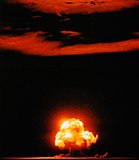 July 16, 1945 - The Manhattan Project - The atomic age begins with the Trinity nuclear test, during which the United States detonates a nuclear bomb based on plutonium at the Trinity Site in New Mexico


Science[edit]
- Physics: the development of quantum theory and nuclear physics.
- Mathematics: the development of game theory and cryptography.
- In 1947, Thor Heyerdahl's raft Kon-Tiki crossed the Pacific Ocean from Peru to Tahiti proving the practical possibility that people from South America could have settled Polynesia in pre-Columbian times, rather than South-East Asia as it was previously believed.
- June 14, 1949, Albert II a rhesus macaque monkey, became the first mammal is space during a U.S. suborbital flight on a V-2 sounding rocket.
- Willard Libby developed radiocarbon dating—a process that revolutionized archaeology.
- The development of the modern evolutionary synthesis.
-
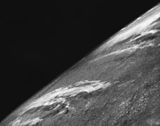 October 24, 1946: V-2 rocket takes first picture of Earth from outer space
 -
 Thor Heyerdahl's raft Kon-Tiki crossed the Pacific Ocean from Peru to Tahiti proving the practical possibility that people from South America could have settled Polynesia in pre-Columbian times

.jpg)
Popular culture[edit]
Film[edit]


- Oscar winners: Rebecca (1940), How Green Was My Valley (1941), Mrs. Miniver (1942), Casablanca (1943), Going My Way (1944), The Lost Weekend (1945), The Best Years of Our Lives (1946), Gentleman's Agreement (1947), Hamlet (1948), All the King's Men (1949).
- Some of Hollywood's most notable blockbuster films of the 1940s include: The Maltese Falcon directed by John Huston (1941), It's a Wonderful Life directed by Frank Capra (1946), Double Indemnity directed by Billy Wilder (1944), Meet Me in St. Louis directed by Vincente Minnelli (1944), Casablanca directed by Michael Curtiz (1942), Citizen Kane directed by Orson Welles (1941), The Great Dictator directed by Charlie Chaplin (1940), The Big Sleep directed by Howard Hawks (1946), The Lady Eve directed by Preston Sturges (1941), The Shop Around the Corner directed by Ernst Lubitsch (1940), White Heat directed by Raoul Walsh (1949), Yankee Doodle Dandy directed by Michael Curtiz (1942), and Notorious directed by Alfred Hitchcock, (1946). The Walt Disney Studios released the animated feature films Pinocchio (1940), Dumbo (1941), Fantasia (1940), and Bambi (1942).
Although the 1940s was a decade dominated by World War II, important and noteworthy films about a wide variety of subjects were made during that era. Hollywood was instrumental in producing dozens of classic films during the 1940s, several of which were about the war and some are on most lists of all-time great films. European cinema survived although obviously curtailed during wartime and yet many films of high quality were made in the United Kingdom, France, Italy, the Soviet Union and elsewhere in Europe. The cinema of Japan also survived. Akira Kurosawa and other directors managed to produce significant films during the 1940s.
Polish filmmakers in Great Britain created anti-nazi color film Calling Mr. Smith (1943) about current nazi crimes in occupied Europe during the war and about lies of nazi propaganda.[6]
Film Noir, a film style that incorporated crime dramas with dark images, became largely prevalent during the decade. Films such as The Maltese Falcon and The Big Sleep are considered classics and helped launch the careers of legendary actors such as Humphrey Bogart and Ava Gardner. The genre has been widely copied since its initial inception.
In France during the war the tour de force Children of Paradise directed by Marcel Carné (1945), was shot in Nazi occupied Paris.[7][8][9] Memorable films from post-war England include David Lean's Great Expectations (1946) and Oliver Twist (1948), Carol Reed's Odd Man Out (1947) and The Third Man (1949), and Powell and Pressburger's A Matter of Life and Death (1946), Black Narcissus (1946) and The Red Shoes (1948), Laurence Olivier's Hamlet, the first non-American film to win the Academy Award for Best Picture and Kind Hearts and Coronets (1949) directed by Robert Hamer. Italian neorealism of the 1940s produced poignant movies made in post-war Italy. Roma, città aperta directed by Roberto Rossellini (1945), Sciuscià directed by Vittorio De Sica (1946), Paisà directed by Roberto Rossellini (1946), La terra trema directed by Luchino Visconti (1948), The Bicycle Thief directed by Vittorio De Sica (1948), and Bitter Rice directed by Giuseppe De Santis (1949), are some well-known examples.
In Japanese cinema, The 47 Ronin is a 1941 black and white two-part Japanese film directed by Kenji Mizoguchi. The Men Who Tread on the Tiger's Tail (1945), and the post-war Drunken Angel (1948), and Stray Dog (1949), directed by Akira Kurosawa are considered important early works leading to his first masterpieces of the 1950s. Drunken Angel (1948), marked the beginning of the successful collaboration between Kurosawa and actor Toshiro Mifune that lasted until 1965.
Music[edit]
| This section needs expansion. You can help by adding to it. (July 2018) |

- Bing Crosby was the best selling pop artist of the 1940s. Crosby was the leading figure of the crooner sound as well as its most iconic, defining artist. By the 1940s, he was an entertainment superstar who mastered all of the major media formats of the day, movies, radio, and recorded music.
- The most popular music style during the 1940s was swing, which prevailed during World War II. In the later periods of the 1940s, less swing was prominent and crooners like Frank Sinatra, along with genres such as bebop and the earliest traces of rock and roll, were the prevalent genre.
Literature[edit]
- For Whom the Bell Tolls by Ernest Hemingway in 1940.
- The Myth of Sisyphus by Albert Camus in 1942.
- The Stranger by Albert Camus in 1942.
- The Little Prince by Antoine de Saint-Exupéry in 1943.
- Anti-Semite and Jew by Jean-Paul Sartre in 1943.
- The Fountainhead by Ayn Rand in 1943.
- No Exit by Jean-Paul Sartre in 1944.
- Pippi Longstocking by Astrid Lindgren in 1945.
- The Diary of Anne Frank by Anne Frank in 1947.
- Death of a Salesman by Arthur Miller in 1949.
- Nineteen Eighty-Four by George Orwell in 1949.
- The Glass Menagerie by Tennessee Williams in 1944.
Fashion[edit]

Because fashion items and fabrics were rationed due to World War II, fashion became more utilitarian. Women's fashion started including suits, which were feminized with straight knee-length skirts and accessories. There were challenges imposed by shortages in rayon, nylon, wool, leather, rubber, metal (for snaps, buckles, and embellishments), and even the amount of fabric that could be used in any one garment.[citation needed] After the fall of France in 1940, Hollywood drove fashion in the United States almost entirely, with the exception of a few trends coming from wartorn London in 1944 and 1945, as America's own rationing hit full force. The idea of function seemed to overtake fashion, if only for a few short months until the end of the war. Fabrics shifted dramatically as rationing and wartime shortages controlled import items such as silk and furs.[citation needed] Floral prints dominated the early 1940s, with the mid-to-late 1940s also seeing what is sometimes referred to as "atomic prints" or geometric patterns and shapes. In response to the war effort, patriotic nautical themes and dark greens and khakis dominating the color palettes, as trousers and wedges slowly replaced the dresses and more traditional heels due to shortages in stockings and gasoline. The most common characteristics of this fashion were the straight skirt, pleats, front fullness, squared shoulders with v-necks or high necks, slim sleeves and the most favorited necklines were sailor, mandarin and scalloped.
People[edit]
Military leaders[edit]
-
 Dwight D. Eisenhower, American General who led the Allied forces during the Normandy invasion.
 -
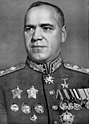 Georgy Zhukov, Soviet Union Field Marshal who led the Red Army during the Battle of Berlin.
 -
 Erwin Rommel, German Field Marshal who led the Nazis during the North African Campaign.
 -
 Yamamoto Isoroku, Japanese Fleet Admiral who led the Imperial Army during the attack on Pearl Harbor.


.jpg)

 Field Marshal Erwin Rommel
- Reichsmarschall Hermann Göring
- Field Marshal Erich von Manstein
- Field Marshal Gerd von Rundstedt
 Field Marshal Carl Gustaf Emil Mannerheim
 Marshal Ion Antonescu
 General Hideki Tōjō
- General Kuniaki Koiso
- Field Marshal Hajime Sugiyama
- Fleet Admiral Isoroku Yamamoto
- Fleet Admiral Osami Nagano
 Field Marshal Georgy Zhukov
- Field Marshal Ivan Konev
 General Dwight D. Eisenhower
- General George Marshall
- General Douglas MacArthur
- General Omar Bradley
- General George S. Patton
- Fleet Admiral Chester W. Nimitz
- Fleet Admiral Ernest J. King
 Field Marshal Harold Alexander
- Field Marshal Bernard Montgomery
 Général d'Armée Jean de Lattre de Tassigny
- Brigadier general Charles de Gaulle
 General Henri Winkelman
- General Bernhard of Lippe-Biesterfeld


Activists and religious leaders[edit]
-
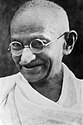 Mohandas Gandhi during the 1940s
 -
 Raoul Wallenberg, c. 1944
 -
 Muhammed Ali Jinnah with Gandhi, 1944.
 -
 Chiune Sugihara c.1940s


- Joel Brand
- Behic Erkin
- Varian Fry
- Mohandas Gandhi
- Billy Graham
- Yitzhak HaLevi Herzog
- Muhammad Ali Jinnah
- Necdet Kent
- Aristides de Sousa Mendes
- Pope Pius XII
- Martha Sharp
- Waitstill Sharp
- Chiune Sugihara
- Raoul Wallenberg
- Abdullah Nur
Politics[edit]
- Abdel Rahman Azzam Pasha, Secretary-general Arab League
- Georgi Mikhailov Dimitrov, Chairman of the Executive Committee Communist International
- Camille Gutt, Managing Director International Monetary Fund
- Jacques Camille Paris, Secretary-general Council of Europe
- Edward Warner, President of the Council International Civil Aviation Organization
- John G. Winant, Director International Labour Organization
Scientists[edit]
Actors / Entertainers[edit]

.jpg)


_01.jpg)
- Fred Allen
- Don Ameche
- Dana Andrews
- Edward Arnold
- Jean Arthur
- Fred Astaire
- Mary Astor
- Lauren Bacall
- Josephine Baker
- Lucille Ball
- Tallulah Bankhead
- Joseph Barbera
- Carl Barks
- Anne Baxter
- Ralph Bellamy
- Jack Benny
- William Bendix
- Ingrid Bergman
- Charles Bickford
- Vivian Blaine
- Humphrey Bogart
- Charles Boyer
- Walter Brennan
- Fanny Brice
- Lloyd Bridges
- Edgar Buchanan
- James Cagney
- Cab Calloway
- Yvonne De Carlo
- John Carradine
- Lon Chaney Jr.
- Charlie Chaplin
- Montgomery Clift
- Charles Coburn
- Claudette Colbert
- Ronald Colman
- Gary Cooper
- Katharine Cornell
- Abbott and Costello
- Joseph Cotten
- Joan Crawford
- Bing Crosby
- Arlene Dahl
- Dorothy Dandridge
- Linda Darnell
- Bette Davis
- Doris Day
- Olivia de Havilland
- William Demarest
- Richard Denning
- Marlene Dietrich
- Walt Disney
- Kirk Douglas
- Irene Dunne
- Duke Ellington
- Alice Faye
- José Ferrer
- Larry Fine
- Barry Fitzgerald
- Errol Flynn
- Henry Fonda
- Joan Fontaine
- Clark Gable
- Ava Gardner
- Judy Garland
- Greer Garson
- Lillian Gish
- Paulette Goddard
- Betty Grable
- Gloria Grahame
- Cary Grant
- Kathryn Grayson
- Virginia Grey
- Sydney Greenstreet
- Edmund Gwenn
- Carl Stuart Hamblen
- William Hanna
- Olivia de Havilland
- Helen Hayes
- Susan Hayward
- Rita Hayworth
- Van Heflin
- Katharine Hepburn
- William Holden
- Bob Hope
- Lena Horne
- Curly Howard
- Moe Howard
- Shemp Howard
- Walter Huston
- Pedro Infante
- Burl Ives
- Anne Jeffreys
- Van Johnson
- Glynis Johns
- Jennifer Jones
- Boris Karloff
- Danny Kaye
- Gene Kelly
- Deborah Kerr
- Alan Ladd
- Veronica Lake
- Hedy Lamarr
- Dorothy Lamour
- Burt Lancaster
- Laurel and Hardy
- Charles Laughton
- Peter Lawford
- Janet Leigh
- Vivien Leigh
- Norman Lloyd
- Gene Lockhart
- June Lockhart
- Carole Lombard
- Peter Lorre
- Myrna Loy
- Vera Lynn
- Ida Lupino
- Fred MacMurray
- Victor Mature
- Fredric March
- Herbert Marshall
- James Mason
- Burgess Meredith
- Ray Milland
- Carmen Miranda
- Marilyn Monroe
- Dennis Morgan
- Frank Morgan
- Harry Morgan
- Jorge Negrete
- Margaret O'Brien
- Maureen O'Hara
- Laurence Olivier
- Janis Paige
- Gregory Peck
- Walter Pidgeon
- Dick Powell
- Eleanor Powell
- Jane Powell
- William Powell
- Tyrone Power
- Robert Preston
- Anthony Quinn
- Claude Rains
- Basil Rathbone
- Ronald Reagan
- Donna Reed
- George Reeves
- Michael Redgrave
- Dolores del Río
- Edward G. Robinson
- Ginger Rogers
- Roy Rogers
- Cesar Romero
- Mickey Rooney
- Rosalind Russell
- George Sanders
- Joseph Schildkraut
- Lizabeth Scott
- Randolph Scott
- Jean Simmons
- Frank Sinatra
- Red Skelton
- Barbara Stanwyck
- James Stewart
- Lewis Stone
- Barry Sullivan
- Ed Sullivan
- Lyle Talbot
- Elizabeth Taylor
- Robert Taylor
- Shirley Temple
- The Three Stooges
- Gene Tierney
- Spencer Tracy
- Lana Turner
- Robert Walker
- John Wayne
- Orson Welles
- Richard Widmark
- Cornel Wilde
- Jane Wyman
- Keenan Wynn
- Loretta Young
Musicians[edit]
-
 Glenn Miller, 1942
 -
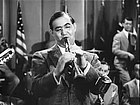 Benny Goodman performing in Stage Door Canteen (1943)
 -
 Bing Crosby, 1945
 -
 Édith Piaf, 1946
 -
 Frank Sinatra, 1947


- Marian Anderson
- Louis Armstrong
- Eddy Arnold
- Gene Autry
- Pearl Bailey
- Benny Carter
- Ray Charles
- Charlie Barnet
- Count Basie
- Irving Berlin
- Al Bowlly
- Les Brown
- Erskine Butterfield
- Sammy Cahn
- Cab Calloway
- Nat King Cole
- Perry Como
- Bing Crosby
- Bob Crosby
- Miles Davis
- Willie Dixon
- Jimmy Dorsey
- Tommy Dorsey
- K. C. Douglas
- Champion Jack Dupree
- Billy Eckstine
- Duke Ellington
- H-Bomb Ferguson
- Ella Fitzgerald
- Ira Gershwin
- Dizzy Gillespie
- Benny Goodman
- Stéphane Grappelli
- Homer Harris
- Screamin' Jay Hawkins
- Richard Hayman
- Dick Haymes
- Earl Hines
- Billie Holiday
- John Lee Hooker
- Lena Horne
- Betty Hutton
- Sir Lancelot
- Big Joe Turner
- Bull Moose Jackson
- Mahalia Jackson
- Harry James
- Louis Jordan
- Blind Willie Johnson
- Al Jolson
- Kitty Kallen
- Danny Kaye
- Sammy Kaye
- Stan Kenton
- B.B. King
- Evelyn Knight
- Gene Krupa
- Frankie Laine
- Mario Lanza
- Peggy Lee
- Dean Martin
- Grady Martin
- Johnny Mercer
- Amos Milburn
- Glenn Miller
- Roy Milton
- Charles Mingus
- Thelonious Monk
- Vaughn Monroe
- Benny Moré
- Ray Noble
- Charlie Parker
- Les Paul
- Édith Piaf
- Cole Porter
- Bud Powell
- Louis Prima
- Django Reinhardt
- Pete Johnson
- Max Roach
- Marty Robbins
- Paul Robeson
- Richard Rodgers
- Artie Shaw
- Dinah Shore
- Frank Sinatra
- Memphis Slim
- Kate Smith
- Billy Strayhorn
- Maxine Sullivan
- Art Tatum
- Martha Tilton
- Ernest Tubb
- Sarah Vaughan
- T-Bone Walker
- Little Walter
- Muddy Waters
- Margaret Whiting
- Cootie Williams
- Hank Williams
- Tex Williams
- Bob Wills
- Teddy Wilson
Bands[edit]

- The Andrew Sisters
- The Boswell Sisters
- The Ink Spots
- The Merry Macs
- The Mills Brothers
- The Pied Pipers
- The Ravens
- The Robins
- Sons of The Pioneers
Sports[edit]
During the 1940s, sporting events were disrupted and changed by the events that engaged and shaped the entire world. The 1940 and 1944 Olympic Games were cancelled because of World War II. During World War II in the United States Heavyweight Boxing Champion Joe Louis and numerous stars and performers from American baseball and other sports served in the armed forces until the end of the war. Among the many baseball players (including well known stars) who served during World War II were Moe Berg, Joe DiMaggio, Bob Feller, Hank Greenberg, Stan Musial (in 1945), Warren Spahn, and Ted Williams. They like many others sacrificed their personal and valuable career time for the benefit and well-being of the rest of society. The Summer Olympics were resumed in 1948 in London and the Winter games were held that year in St. Moritz, Switzerland.
In 1947, Wataru Misaka of the New York Knicks became the first person of color to play in modern professional basketball, just months after Jackie Robinson had broken the color barrier in Major League Baseball for the Brooklyn Dodgers.[11]
Baseball[edit]
.jpg)
During the early 1940s World War II had an enormous impact on Major League Baseball as many players including many of the most successful stars joined the war effort. After the war many players returned to their teams, while the major event of the second half of the 1940s was the 1945 signing of Jackie Robinson to a players contract by Branch Rickey the general manager of the Brooklyn Dodgers. Signing Robinson opened the door to the integration of Major League Baseball finally putting an end to the professional discrimination that had characterized the sport since the 19th century.
- Roy Campanella
- Joe DiMaggio
- Bill Dickey
- Larry Doby
- Bob Feller
- Josh Gibson
- Hank Greenberg
- Monte Irvin
- Buck Leonard
- Johnny Mize
- Stan Musial
- Satchel Paige
- Branch Rickey
- Jackie Robinson
- Ted Williams
Boxing[edit]

During the mid-1930s and throughout the years leading up to the 1940s Joe Louis was an enormously popular Heavyweight boxer. In 1936, he lost an important 12 round fight (his first loss) to the German boxer Max Schmeling and he vowed to meet Schmeling once again in the ring. Louis' comeback bout against Schmeling became an international symbol of the struggle between the US and democracy against Nazism and Fascism. When on June 22, 1938, Louis knocked Schmeling out in the first few seconds of the first round during their rematch at Yankee Stadium, his sensational comeback victory riveted the entire nation. Louis enlisted in the U.S. Army on January 10, 1942, in response to the Japanese attack on Pearl Harbor. Louis' cultural impact was felt well outside the ring. He is widely regarded as the first African American to achieve the status of a nationwide hero within the United States, and was also a focal point of anti-Nazi sentiment leading up to and during World War II.[12]
- Buddy Baer
- Ezzard Charles
- Billy Conn
- Rocky Graziano
- Joe Louis
- Sugar Ray Robinson
- Max Schmeling
- Jersey Joe Walcott
- Tony Zale
Track and Field[edit]
See also[edit]

- 1940s in television
- 1940s in literature
- Greatest Generation (the remaining members of that generation came of age in the first half of the decade to serve in WW II).
Timeline[edit]
The following articles contain brief timelines listing the most prominent events of the decade.
Notes[edit]
References[edit]
- ^ "Holocaust," Encyclopædia Britannica, 2009: "the systematic state-sponsored killing of six million Jewish men, women, and children and millions of others by Nazi Germany and its collaborators during World War II. The Germans called this "the final solution to the Jewish question ..."
- ^ Niewyk, Donald L. The Columbia Guide to the Holocaust, Columbia University Press, 2000, p. 45: "The Holocaust is commonly defined as the murder of more than 5,000,000 Jews by the Germans in World War II." Also see "The Holocaust", Encyclopædia Britannica, 2007: "the systematic state-sponsored killing of six million Jewish men, women and children, and millions of others, by Nazi Germany and its collaborators during World War II. The Germans called this "the final solution to the Jewish question".
- ^ Niewyk, Donald L. and Nicosia, Francis R. The Columbia Guide to the Holocaust, Columbia University Press, 2000, pp. 45–52.
- ^ Donald Niewyk suggests that the broadest definition, including Soviet civilian deaths, would produce a death toll of 17 million. [1] Estimates of the death toll of non-Jewish victims vary by millions, partly because the boundary between death by persecution and death by starvation and other means in a context of total war is unclear. Overall, about 5.7 million (78 percent) of the 7.3 million Jews in occupied Europe perished (Gilbert, Martin. Atlas of the Holocaust 1988, pp. 242–244). Compared to five to 11 million (1.4 percent to 3.0 percent) of the 360 million non-Jews in German-dominated Europe. Small, Melvin and J. David Singer. Resort to Arms: International and civil Wars 1816–1980 and Berenbaum, Michael. A Mosaic of Victims: Non-Jews Persecuted and Murdered by the Nazis. New York: New York University Press, 1990
- ^ Markwell, Donald (2006). John Maynard Keynes and International Relations: Economic Paths to War and Peace. Oxford: Oxford University Press. ISBN 978-0-198-29236-4.
- ^ "Calling Mr Smith". Centre Pompidou. Archived from the original on 2021-02-21. Retrieved 2021-02-13.
- ^ "Les Enfants du Paradis - Film (Movie) Plot and Review - Publications". www.filmreference.com.
- ^ "Les Enfants du Paradis". www.eufs.org.uk. Archived from the original on 2009-01-13. Gio MacDonald, Edinburgh University Film Society program notes, 1994–95
- ^ "Quoted by Roger Ebert, Children of Paradise, Chicago Sun-Times, 6 January 2002 review of the Criterion DVD release". Archived from the original on 20 September 2012. Retrieved 27 December 2021.
- ^ "1940's Fashion Trends". Archived from the original on 2011-07-18. Retrieved 2011-03-01.
- ^ Goldstein, Richard (22 November 2019). "New York Times". Retrieved November 26, 2019.
- ^ Bloom, John; Willard, Michael Nevin (2002). John Bloom; Michael Nevin Willard (eds.). Sports Matters: Race, Recreation, and Culture. New York: New York University Press. pp. 46–47. ISBN 978-0-8147-9882-9.
Further reading[edit]
- Buchanan, Andrew. "Globalizing the Second World War," Past and Present no. 258 (February 2023): 246-281. online; also see online review
- Lewis, Thomas Tandy, ed. The Forties in America. 3 volumes. Pasadena: Salem Press, 2011.
- Lingeman, Richard. The Noir Forties: The American People from Victory to Cold War (New York: Nation Books, 2012. xii, 420 pp.)
- Yust, Walter, ed., 10 Eventful Years (4 vol., Chicago: Encyclopædia Britannica Inc, 1947), encyclopedia of world events 1937-46
External links[edit]

- Heroes of the 1940s - slideshow by Life magazine
- 1940s.org
History of the 20th century | |
|---|---|
| Topics | |
| Lists |
|

| National | |
|---|---|
| Artists | |
