


North American beaver
| North American beaver | |
|---|---|

| |
| A male North American beaver | |
Scientific classification 
| |
| Domain: | Eukaryota |
| Kingdom: | Animalia |
| Phylum: | Chordata |
| Class: | Mammalia |
| Order: | Rodentia |
| Family: | Castoridae |
| Genus: | Castor |
| Species: | C. canadensis
|
| Binomial name | |
| Castor canadensis | |
| Subspecies[23][24][25][26][27] | |
|
List
| |

| |
| Distribution of the North American beaver (dark green – native, light green – introduced) | |
| Synonyms | |
|
Castor fiber canadensis | |
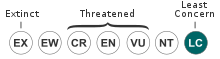
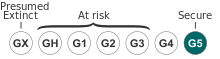
The North American beaver (Castor canadensis) is one of two extant beaver species, along with the Eurasian beaver (Castor fiber).[23] It is native to North America and has been introduced in South America (Patagonia) and Europe (primarily Finland and Karelia). The North American beaver is one of the official national wildlife of Canada symbols and is the official state mammal of Oregon and New York.[28] North American beavers are widespread across the continental United States, Canada, southern Alaska, and some parts of northern Mexico.
In Canada and the United States, the North American beaver is often referred to simply as "beaver", although this can cause some confusion because another distantly related rodent, Aplodontia rufa, is often called the "mountain beaver". Other vernacular names, including American beaver[23] and Canadian beaver,[29] distinguish this species from the other extant beaver species, Castor fiber, which is native to Eurasia.
Taxonomy[edit]
Evolution[edit]
The first fossil records of beaver are 10 to 12 million years old in Germany, and they are thought to have migrated to North America across the Bering Strait. The oldest fossil record of beavers in North America are of two beaver teeth near Dayville, Oregon, and are 7 million years old.[30]
Subspecies[edit]
At one time, 25 subspecies of beavers were identified in North America, with distinctions based primarily on slight morphological differences and geographical isolation at the time of discovery. However, modern techniques generally use genetics rather than morphology to distinguish between subspecies, and currently the Integrated Taxonomic Information System (which provides authoritative[31] taxonomic information on plants, animals, fungi, and microbes of North America and the world) does not recognize any subspecies of C. canadensis, though a definitive genetic analysis has not been performed. Such an analysis would be complicated by the fact that substantial genetic mixing of populations has occurred because of the numerous reintroduction efforts intended to help the species recover following extirpation from many regions.
The most widespread (formerly recognized) subspecies, which perhaps are now best thought of as populations with some distinct physical characteristics, are C. c. acadicus (New England beaver), C. c. canadensis (Canadian beaver), C. c. carolinensis (Carolina beaver), and C. c. missouriensis (Missouri River beaver).[32] The Canadian beaver originally inhabited almost all of the forested area of Canada,[33] and because of its more valued fur, was often selected for reintroductions elsewhere. The Carolina beaver is found in the southeastern United States; the Missouri River beaver, as its name suggests, is found in the Missouri River and its tributaries; and C. c. acadicus is found throughout the New England area in the northeastern United States.
Description[edit]


The beaver is the largest rodent in North America and competes with its Eurasian counterpart, the European beaver, for being the third-largest in the world, both following the South American capybara and lesser capybara. The European species is slightly larger on average but the American has a larger known maximum size. Adults usually weigh from 11 to 32 kg (24 to 71 lb), with 20 kg (44 lb) being typical. In New York, the average weight of adult male beavers was 18.9 kg (42 lb), while non-native females in Finland averaged 18.1 kg (40 lb). However, adults of both sexes averaged 16.8 kg (37 lb) in Ohio.[34][35][36] The species seems to conform to Bergmann's rule, as northern animals appear to be larger. In the Northwest Territory, adults weighed a median of 20.5 kg (45 lb).[37] The American beaver is slightly smaller in average body mass than the Eurasian species.[35] The head-and-body length of adult North American beavers is 74–90 cm (29–35 in), with the tail adding a further 20–35 cm (7.9–13.8 in). Very old individuals can exceptionally exceed normal sizes, weighing more than 40 kg (88 lb) or even as much as 50 kg (110 lb) (higher than the maximum known for the Eurasian beaver).[38][39][40][41]
Like the capybara, the beaver is semiaquatic. The beaver has many traits suited to this lifestyle. It has a large, flat, paddle-shaped tail and large, webbed hind feet. The unwebbed front paws are smaller, with claws. The forepaws are highly dextrous, and are used both for digging, and to fold individual leaves into their mouth and to rotate small, pencil-sized stems as they gnaw off bark.[42] The eyes are covered by a nictitating membrane which allows the beaver to see under water. The nostrils and ears are sealed while submerged. Their lips can be closed behind their front teeth so that they can continue to gnaw underwater.[43] A thick layer of fat under its skin insulates the beaver from its coldwater environment.
The beaver's fur consists of long, coarse outer hairs and short, fine inner hairs (see Double coat). The fur has a range of colors, but usually is dark brown. Scent glands near the genitals secrete an oily substance known as castoreum, which the beaver uses to waterproof its fur. There is also another set of oil glands producing unique chemical identifiers in the form of waxy esters and fatty acids.[42] The lush, workable fur was made into a number of products, most notably hats. Demand for furs for hats drove beavers nearly to the point of extinction, and the North American species was saved principally by a sudden change in style.
The beaver possesses continuously (or constantly) growing incisors, and is a hindgut fermenter whose cecum, populated by symbiotic bacteria, helps to digest plant-based material. These traits are not unique to beavers, and are in fact present among all rodents.[44] Nonetheless, the beaver is remarkably specialized for the efficient digestion of its lignocellulose-heavy diet.[45]
Brain anatomy of the beaver is not particularly specialized for its semiaquatic life history. The brain masses of a beaver weighing 11.7 and 17 kg are 41 and 45 g respectively. C. canadensis has an encephalization quotient of 0.9 compared to other rodents; this is intermediate between similar terrestrial rodents and arboreal squirrels, and higher than similar aquatic terrestrial rodents, the muskrats and nutria. The cerebrum is well developed, and the neocortex comparatively large. Larger areas of the beaver's somatosensory cortex are dedicated to the processing of stimuli from the lips and the hands, more so than the tail and whiskers, which play a relatively minor role. The visual area of the brain is smaller than the gray squirrel.[43]
Distribution[edit]
Before their near-extirpation by trapping in North America, beavers were practically ubiquitous and lived from south of the arctic tundra to the deserts of northern Mexico, and from the Atlantic to the Pacific Oceans.[46][47][48] They are widely distributed in boreal and temperate ecoregions, where populations are rebounding from historic over-exploitation. Recently, beaver have been observed colonizing arctic tundra, likely as a result of climate-induced increases in riparian shrubs.[49][50][51]
Physician naturalist Edgar Alexander Mearns' 1907 report of beaver on the Sonora River may be the earliest report on the southernmost range of this North American aquatic mammal.[52] However, beavers have also been reported both historically and contemporarily in Mexico on the Colorado River, Bavispe River, and San Bernardino River in the Mexican states of Sonora and Chihuahua.[53][54][55]
Behavior[edit]


Beavers are active mainly at night. They are excellent swimmers and may remain submerged up to 15 minutes. More vulnerable on land, they tend to remain in the water as much as possible.[56] They use their flat, scaly tail both to signal danger by slapping the surface of the water and as a location for fat storage.
They construct their homes, or "lodges", out of sticks, twigs, rocks, and mud in lakes, streams, and tidal river deltas.[57] These lodges may be surrounded by water, or touching land, including burrows dug into river banks. Beavers are well known for building dams across streams and constructing their lodges in the artificial ponds which form. When building in a pond, the beavers first make a pile of sticks and then eat out one or more underwater entrances and two platforms above the water surface inside the pile. The first is used for drying off. Towards winter, the lodge is often plastered with mud which, when it freezes, has the consistency of concrete. A small air hole is left in the top of the lodge.
Dam-building[edit]
The purpose of the dam is to create a deepwater refuge enabling the beaver to escape from predators. When deep water is already present in lakes, rivers, or larger streams, the beaver may dwell in a bank burrow and bank lodge with an underwater entrance. The beaver dam is constructed using branches from trees the beavers cut down, as well as rocks, grass, and mud. Where naturally-occurring woody material is limiting, beavers may build their dams largely of rocks.[58] The inner bark, twigs, shoots, and leaves of such trees are also an important part of the beaver's diet.[59] The trees are cut down using their strong incisor teeth. Their front paws are used for digging and carrying and placing materials. The sound of running water dictates when and where a beaver builds its dam. Besides providing a safe home for the beaver, beaver ponds also provide habitat for waterfowl, fish, and other aquatic animals. Their dams help reduce soil erosion and can help reduce flooding. However, beaver dams are not permanent and depend on the beavers' continued presence for their maintenance. Beavers generally concentrate on building and repairing dams in the fall in preparation for the coming winter. In northern areas, they often do not repair breaches in the dam made by otters, and sometimes breach the dam themselves and lower the water level in the pond to create more breathing space under the ice or get easier access to trees below the dam. In a 1988 study in Alberta, Canada, no beavers repaired "sites of water loss" during the winter. Of 178 sites of water loss, beavers repaired 78 when water was opened, and did not repair 68. The rest were partially repaired.[60]
Beavers are best known for their dam-building. They maintain their pond-habitat by reacting quickly to the sound of running water, and damming it up with tree branches and mud. Early ecologists believed that this dam-building was an amazing feat of architectural planning, indicative of the beaver's high intellect. This theory was tested when a recording of running water was played in a field near a beaver pond. Although it was on dry land, the beaver covered the tape player with branches and mud.[61] The largest beaver dam is 2,790 ft (850 m) in length—more than half a mile long—and was discovered via satellite imagery in 2007.[62] It is located on the southern edge of Wood Buffalo National Park in northern Alberta and is more than twice the width of the Hoover Dam which spans 1,244 ft (379 m).[63][64]

Normally, the purpose of the dam is to provide water around their lodges that is deep enough that it does not freeze solid in winter. The dams also flood areas of surrounding forest, giving the beaver safe access to an important food supply, which is the leaves, buds, and inner bark of growing trees. In colder climates where their pond freezes over, beavers also build a food cache from this food resource.[42] To form the cache, beavers collect food in late fall in the form of tree branches, storing them under water (usually by sticking the sharp chewed base of the branches into the mud on the pond bottom), where they can be accessed through the winter. Often, the pile of food branches projects above the pond and collects snow. This insulates the water below it and keeps the pond open at that location.[65] The frozen combination of branches and ice is known as a cap, sealing the food cache. Beavers often maintain an underwater entrance to their dam, and they can access their food cache from their lodge by swimming under the ice. In warmer climes, a winter food store is less common.[42]
Muskrats have been thought to steal food from beaver lodges, but seemingly cooperative relationships exist, with beavers allowing muskrats to reside in their lodge if they gather fresh reeds.[66]
Canals[edit]
Another component to the beaver's habitat is the canal. Canals are used to float logs to a pond, and dams may also be used to maintain the water levels in these canals. Several land trails can extend from the canals.[67] Despite being widespread in some beaver-inhabited areas, beaver canals and their environmental effects are much less studied than beaver dams. Beaver primarily develop canals to increase accessibility of river resources, facilitate transport of acquired resources, and to decrease the risk of predation. Beaver canals can be over 0.5 km in length.[68] Beavers build canals by pushing through soil and vegetation using their forelimbs.
It has been hypothesized that beavers' canals are not only transportation routes to extend foraging, but also an extension of their "central place" around the lodge and/or food cache. A 2012 study of beavers' mark on the landscape found that cut stumps were negatively related to distance from beaver canals, but not to the central body of water. This finding suggested that beavers may consider the canals to be part of their "central place" as far as foraging activity is concerned.[69]
Social behavior[edit]

Communication is highly developed in beaver, including scent marking, vocalization, and tail slapping. Beaver deposit castoreum on piles of debris and mud called scent mounds, which are usually placed on or near lodges, dams, and trails less than a meter from water. Over 100 of such mounds can be constructed within one territory.[42] Beaver colonies with close neighbors constructed more "scent mounds" than did isolated colonies, and the number of scent mounds at each active lodge is correlated with the distance to the nearest occupied lodge.[70]
Although seven vocal sounds have been described for beaver, most zoologists recognize only three: a whine, hiss, and growl. Vocalizations and tail slapping may be used to beg for food, signal to family members to warn of predators, or to drive away or elicit a response from predators.
Beavers usually mate for life, forming familial colonies. Beaver "kits" are born precocious and with a developed coat. The young beaver "kits" typically remain with their parents up to two years. Kits express some adult behaviors, but require a long period in the family to develop their dam construction skills, and other abilities required for independent life.[42]
Diet[edit]
Beavers are herbivorous generalists with sophisticated foraging preferences. Beavers consume a mix of herbaceous and woody plants, which varies considerably in both composition and species diversity by region and season.[42] They prefer aspen and other poplars, but also take birch, maple, willow, alder, black cherry, red oak, beech, ash, hornbeam, and occasionally pine and spruce.[65] They also eat cattails, water lilies, and other aquatic vegetation, especially in the early spring. Contrary to widespread belief, they do not eat fish.[71]
Beavers select food based on taste, coarse physical shape, and odor. Beavers feed on wood, bark, cambium,[72] branches, twigs, roots, buds,[72] leaves, stems, sprouts, and in some cases, the sap and storax of pine and sweetgum.[42]
When herbaceous plants are actively growing, they make up much of the beaver's diet. In the winter, beavers switch to woody plants and the food they have stored over the winter. The protein to calorie ratio of a beaver's diet is 40 mg/calorie in summer and 8 mg/calorie for the rest of the year. In northern latitudes, the water lilies Nymphaea and Nuphar are the most important herbaceous component. The rhizomes are stored in the food cache and remain actively growing.[42]
Willow is an important protein source and is likely to be available for the longest period of time in a beaver's habitat especially in the far north. When available, aspen and poplar are preferred over willow. Conifers are also cut or gnawed by beavers, and used for food and/or building material.
Beavers do not necessarily use the same trees as construction material and as food. Inedible material is more likely to be used as the cap of a beaver family's food cache, the upper part which is frozen in the ice, while the cache itself is composed of edible, high quality branches, which remain unfrozen and accessible.[42]
Beavers avoid red maple, which can be the only tree left standing at the edges of some beaver ponds.[42][73]
The beaver's gut microbiome is complex and specialized for a wood-heavy diet, sharing a number of similarities with other mammalian herbivores. However the microbial community in the beaver shows less taxonomic diversity than the "typical" mammalian gut. The major OTUs are Bacteroidota and Bacillota.[45]
Predators[edit]

Common natural predators include coyotes, wolves, and mountain lions.[74] American black bears may also prey on beavers if the opportunity arises, often by smashing their paws into the beavers' lodges.[75][76][77] Perhaps due to differing habitat preferences, grizzly bears were not known to hunt beavers in Denali National Park, Alaska.[78] Less significant predators include wolverines, which may attack a rare beaver of up to adult size, and Canada lynx, bobcats, and foxes (predators of kits or very sick or injured animals, rather than full-grown beavers due to their increasingly smaller size). American alligators, which only minimally co-exist in the wild with beavers, also seldom threaten them. Both golden eagles (Aquila chrysaetos) and bald eagles (Haliaeetus leucocephalus) may on occasion prey on a beaver, most likely only small kits.[79] Despite repeated claims, no evidence shows that North American river otters are typically predators of beavers but anecdotally may take a rare beaver kit.[80]
Reproduction[edit]
North American beavers have one litter per year, coming into estrus for only 12 to 24 hours, between late December and May but peaking in January. Unlike most other rodents, beaver pairs are monogamous, staying together for multiple breeding seasons. Gestation averages 128 days and they have a range of three to six kits per litter (usually 4-5).[81] Most beavers do not reproduce until they are three years of age, but about 20% of two-year-old females reproduce.[82]
Differences from European beaver[edit]

Although North American beavers are superficially similar to the European beaver (Castor fiber), several important differences exist between the two species. North American beavers tend to be slightly smaller, with smaller, more rounded heads; shorter, wider muzzles; thicker, longer, and darker underfur; wider, more oval-shaped tails; and longer shin bones, allowing them a greater range of bipedal locomotion than the European species. North American beavers have shorter nasal bones than their European relatives, with the widest point being at the middle of the snout for the former, and in the tip for the latter. The nasal opening for the North American species is square, unlike that of the European species, which is triangular. The foramen magnum is triangular in the North American beaver, and rounded in the European. The anal glands of the North American beaver are smaller and thick-walled with a small internal volume compared to that of the European species. Finally, the guard hairs of the North American beaver have a shorter hollow medulla at their tips. Fur color is also different. Overall, 50% of North American beavers have pale brown fur, 25% are reddish brown, 20% are brown, and 6% are blackish, while in European beavers, 66% have pale brown or beige fur, 20% are reddish brown, nearly 8% are brown, and only 4% have blackish coats.[83]
The two species are not genetically compatible. North American beavers have 40 chromosomes, while European beavers have 48. Also, more than 27 attempts were made in Russia to hybridize the two species, with one breeding between a male North American beaver and a female European resulting in one stillborn kit. These factors make interspecific breeding unlikely in areas where the two species' ranges overlap.[83]
Ecology[edit]
.jpg)
The beaver was trapped out and almost extirpated in North America because its fur and castoreum were highly sought after.[47] The beaver furs were used to make clothing and beaver hats. In the United States, extensive trapping began in the early 17th century, with more than 10,000 beaver per year taken for the fur trade in Connecticut and Massachusetts between 1620 and 1630.[84] From 1630 to 1640, around 80,000 beavers were taken annually from the Hudson River and western New York.[85] From 1670 onwards, the Hudson's Bay Company sent two or three trading ships into the bay every year to take furs to England from Canada. Archaeological and historical evidence suggests that beaver ponds created "moth-hole like" habitats in the deciduous forest that dominated eastern North America. This nonforest habitat attracted both Native American and early colonial hunters to the abundant fish, waterfowl, and large game attracted to the riparian clearings created by these aquatic mammals. The first colonial farmers were also attracted to the fertile, flat bottomlands created by the accumulated silt and organic matter in beaver ponds.[86]
As eastern beaver populations were depleted, English, French, and American trappers pushed west. Much of the westward expansion and exploration of North America was driven by the quest for this animal's fur. Before the 1849 California Gold Rush, an earlier, 19th-century California Fur Rush drove the earliest American settlement in that state. During the roughly 30 years (1806–1838) of the era of the mountain man, the West from Missouri to California and from Canada to Mexico was thoroughly explored and the beaver was brought to the brink of extinction.
With protection in the late 19th and early 20th centuries, the current beaver population has rebounded to an estimated 10 to 15 million; this is a fraction of the originally estimated 100 to 200 million North American beavers before the days of the fur trade.[87][88]
.jpg)
These animals are considered pests in parts of their range because their dams can cause flooding, or because their habit of felling trees can pose danger to people, as in Charlotte, North Carolina's Park Road Park.[90] Because they are persistent in repairing damage to the dam, they were historically relocated or exterminated. Nonlethal methods of containing beaver-related flooding have been developed.[91] One such flow device has been used by both the Canadian and U.S. governments, called "beaver deceivers" or levelers, invented and pioneered by wildlife biologist Skip Lisle.[92]
The beaver is a keystone species, increasing biodiversity in its territory through creation of ponds and wetlands.[93] As wetlands are formed and riparian habitats enlarged, aquatic plants colonize newly available watery habitat. Insect, invertebrate, fish, mammal, and bird diversities are also expanded.[94] Effects of beaver recolonization on native and non-native species in streams where they have been historically absent, particularly dryland streams, is not well-researched.[95]
Relationship with humans[edit]
As introduced non-native species[edit]

In the 1940s, beavers were brought to Tierra del Fuego in southern Chile and Argentina for commercial fur production and introduced near Fagnano Lake. Although the fur enterprise failed, 25 mating pairs of beavers were released into the wild. Having no natural predators in their new environment, they quickly spread throughout the main island, and to other islands in the archipelago, reaching a number of 100,000 individuals within just 50 years. Although they have been considered an invasive species, it has been more recently shown that the beaver have some beneficial ecological effects on native fish and should not be considered wholly detrimental.[96] Although the dominant Lenga beech (Nothofagus pumilio) forest can regenerate from stumps, most of the newly created beaver wetlands are being colonized by the rarer native Antarctic beech (Nothofagus antarctica). It is not known whether the shrubbier Antarctic beech will be succeeded by the originally dominant and larger Lengo beech, however, and the beaver wetlands are readily colonized by non-native plant species.[96] In contrast, areas with introduced beaver were associated with increased populations of the native catadromous puye fish (Galaxias maculatus).[97][98] Furthermore, the beavers did not seem to have a highly beneficial impact on the exotic brook trout (Salvelinus fontinalis) and rainbow trout (Oncorhynchus mykiss) which have negative impacts on native stream fishes in the Cape Horn Biosphere Reserve, Chile.[98] They have also been found to cross saltwater to islands northward; and reached the Chilean mainland in the 1990s.[99] On balance, because of their landscape-wide modifications to the Fuegian environment and because biologists want to preserve the unique biota of the region, most favor their removal.[100]
North American beavers were released in Finland in 1937, before it was realized that they formed a separate species; following this, 7 beavers expanded to a population of 12,000 within 64 years.[101] Eurasian beavers had earlier been extirpated from the region, so the release was intended as a reintroduction project.[102] By 1999, it was estimated that 90% of beavers in Finland were the American species. However, the species is not always considered invasive, as in Europe it has a similar keystone effect to European beavers, which have not recolonized the area. The beaver population has been controlled by issuing hunting licenses.[103] A report in 2010 concluded that while the current population of American beavers was not problematic, as the species has larger litters than European beavers and builds somewhat larger dams, it could become a problem if its range continues expanding into Russia, but this does not seem to be taking place.[104]
In Europe, significant invasive populations of Canadian beaver are only present in Finland and Karelia, as the boundary between species has somewhat stabilized, but smaller occurrences have been detected elsewhere.[102] Ephemeral populations of C. canadensis in Germany and Poland were found from the 1950s to 1970s. Zoo escapes in 2006 created a small population of invasive C. canadensis in Luxembourg, Rhineland-Palatinate and Belgium.[101] American beavers have not been detected in Sweden, Norway, or Denmark.[104]
As food[edit]
Beaver meat is similar tasting to lean beef, but care must be taken to prevent contamination from the animal's strong castor (musk) gland. It is usually slow-cooked in a broth, and was a valuable food source to Native Americans.[citation needed] Early French Canadian Catholics considered beaver to be "four-legged fish" that could be eaten at Lent.[105]
Symbolism[edit]

.svg)
As one of the national symbols of Canada,[106] the North American beaver is depicted on the Canadian nickel.[106] This beaver was also featured on the first Canadian postage stamp, the Three Penny Beaver, which is considered the first postage stamp to show an animal instead of a head of state.[107] It is also the state animal of Oregon and New York of the United States, and a common school emblem for engineering schools, including the California Institute of Technology, the Massachusetts Institute of Technology, and the University of Alberta as well as the mascot for Oregon State University, Babson College, and the City College of New York. A beaver is featured prominently on the stamp and seal issued to Professional Engineers and Geoscientists by APEGA. It also appears on the back on the state flag of Oregon. The beaver also appears in the coats of arms of the Hudson's Bay Company,[108] University of Toronto, Wilfrid Laurier University, and the London School of Economics.
The beaver is also the symbol of the Royal Canadian Engineers both combat and civil.
Busy beaver is a term in theoretical computer science which refers to a terminating program of a given size that produces the most output possible.
Much of the early economy of New Netherland was based on the beaver fur trade. As such, the seal of New Netherland featured the beaver; likewise, the coats of arms of Albany, New York and New York City included the beaver.
See also[edit]
References[edit]
- ^ Cassola, F. (2016). "Castor canadensis". IUCN Red List of Threatened Species. 2016: e.T4003A22187946. doi:10.2305/IUCN.UK.2016-3.RLTS.T4003A22187946.en. Retrieved November 20, 2021.
- ^ "Castor canadensis". NatureServe Explorer. Retrieved April 17, 2024.
- ^ a b Kuhl, Heinrich (1820). "Castor Canadensis". Beiträge zur Zoologie und vergleichenden Anatomie. Frankfurt: Verlag der Hermannschen Buchhandlung. pp. 64–65. Archived from the original on August 12, 2018. Retrieved February 21, 2018.
- ^ a b Bailey, Vernon; Doutt, J. Kenneth (1942). "Two New Beavers from Labrador and New Brunswick". Journal of Mammalogy. 23 (1): 86–88. doi:10.2307/1374859. JSTOR 1374859.
- ^ Nelson, E. W. (1927). "Description of a New Subspecies of Beaver". Proceedings of the Biological Society of Washington. 40: 125–126. Archived from the original on July 31, 2017. Retrieved February 21, 2018.
- ^ a b Taylor, Walter P. (1916). "The Status of the Beavers of Western North America, with a Consideration of the Factors in their Speciation". University of California Publications in Zoology. 12 (15): 413–495. Archived from the original on July 31, 2017. Retrieved February 21, 2018.
- ^ Allen, Glover M. (1942). "Newfoundland Beaver". Extinct and Vanishing Mammals of the Western Hemisphere, with the Marine Species of All the Oceans. American Committee for International Wild Life Protection. pp. 62–63. Archived from the original on July 31, 2017. Retrieved February 21, 2018.
- ^ a b Rhoads, Samuel N. (1898). "Contributions to a Revision of the North American Beavers, Otters and Fishers". Transactions of the American Philosophical Society. New Ser. 19 (3): 417–439. doi:10.2307/1005498. hdl:2027/hvd.32044107349482. JSTOR 1005498. Archived from the original on July 31, 2017. Retrieved February 21, 2018.
- ^ Warren, Edward R.; Hall, E. Raymond (1939). "A New Subspecies of Beaver from Colorado". Journal of Mammalogy. 20 (3): 358–362. doi:10.2307/1374265. JSTOR 1374265.
- ^ a b c Durrant, Stephen D.; Crane, Harold (1948). "Three New Beavers from Utah". University of Kansas Publications, Museum of Natural History. 1 (20): 407–417. Archived from the original on July 31, 2017. Retrieved February 21, 2018.
- ^ Mearns, Edgar A. (1898). "Preliminary Diagnoses of New Mammals of the Genera Sciurus, Castor, Neotoma, and Sigmodon, from the Mexican Border of the United States". Proceedings of the United States National Museum. 20 (1132): 502–503. doi:10.5479/si.00963801.1132.501. Archived from the original on July 31, 2017. Retrieved February 21, 2018.
- ^ Jewett, S. G.; Hall, E. R. (1940). "A New Race of Beaver from Oregon". Journal of Mammalogy. 21 (1): 87–89. doi:10.2307/1374665. JSTOR 1374665.
- ^ Gray, J. E. (1869). "On the White-toothed American Beaver". The Annals and Magazine of Natural History. 4th Ser. 4 (22): 293. doi:10.1080/00222936908696055. Archived from the original on July 31, 2017. Retrieved February 21, 2018.
- ^ a b Bailey, Vernon (1913). "Two New Subspecies of North American Beavers". Proceedings of the Biological Society of Washington. 26: 191–194. Archived from the original on July 31, 2017. Retrieved February 21, 2018.
- ^ Bailey, V. (1919). "A New Subspecies of Beaver from North Dakota". Journal of Mammalogy. 1 (1): 31–32. doi:10.1093/jmammal/1.1.31. JSTOR 1373717.
- ^ Heller, Edmund (1909). "The Mammals". University of California Publications in Zoology. 5 (2, Birds and Mammals of the 1907 Alexander Expedition to Southeastern Alaska): 250–255. Archived from the original on July 31, 2017. Retrieved February 21, 2018.
- ^ Goldman, E. A. (1932). "A New Beaver from Arizona". Journal of Mammalogy. 13 (3): 266–267. doi:10.2307/1374004. JSTOR 1374004.
- ^ Benson, Seth B. (1933). "A New Race of Beaver from British Columbia". Journal of Mammalogy. 14 (4): 320–325. doi:10.2307/1373950. JSTOR 1373950.
- ^ Taylor, Walter P. (1912). "The Beaver of West Central California". University of California Publications in Zoology. 10 (7): 167–169. Archived from the original on July 31, 2017. Retrieved February 21, 2018.
- ^ Grinnell, Joseph (1933). "Review of the Recent Mammal Fauna of California". University of California Publications in Zoology. 40 (2): 166. Archived from the original on February 20, 2021. Retrieved July 28, 2017.
- ^ Davis, William B. (1939). The Recent Mammals of Idaho. Caldwell, ID: Caxton. p. 273.
- ^ Bailey, Vernon (1905). "Castor canadensis texensis subsp. nov. Texas Beaver". Biological Survey of Texas. North American Fauna. Vol. 25. Washington: Government Printing Office. pp. 122–125. Archived from the original on July 31, 2017. Retrieved February 21, 2018.
- ^ a b c Helgen, K.M. (2005). "Family Castoridae". In Wilson, D.E.; Reeder, D.M (eds.). Mammal Species of the World: A Taxonomic and Geographic Reference (3rd ed.). Johns Hopkins University Press. p. 842. ISBN 978-0-8018-8221-0. OCLC 62265494.
- ^ Warner, Richard E. and Hendrix, Kathleen M. (eds.) (1984). California Riparian Systems: Ecology, Conservation, and Productive Management Archived November 22, 2021, at the Wayback Machine University of California Press, p. 952. Retrieved August 4, 2007.
- ^ Browse Genus equals Castor by Scientific Name for All Museums Archived June 14, 2007, at the Wayback Machine. Berkeley Natural History Museums. Retrieved August 4, 2007.
- ^ Tesky, Julie L. (1993) Wildlife Species: Castor canadensis Archived August 12, 2007, at the Wayback Machine Fire Effects Information System (Online), U.S. Department of Agriculture, Forest Service, Rocky Mountain Research Station, Fire Sciences Laboratory. Retrieved August 4, 2007.
- ^ Jenkins, Stephen H.; Busher, Peter E. (1979). "Castor canadensis". Mammalian Species (120): 1–8. doi:10.2307/3503787. JSTOR 3503787.
- ^ Official symbols of Canada Archived June 24, 2016, at the Wayback Machine. Government of Canada
- ^ Invasive Species Specialist Group (ISSG) (2006). "Castor canadensis (mammal)". Global Invasive Species Database (GISD). IUCN Species Survival Commission. Archived from the original on October 16, 2008. Retrieved July 16, 2009: "Common names: American beaver (English), beaver (English), Canadian beaver, castor (French), castor americano (Spanish), North American beaver (English)"
{{cite web}}: CS1 maint: postscript (link) - ^ "N. America's Earliest Beaver Found Near Dayville – Discovered Teeth "A Dam Important Find,' Scientists Say". KVTZ. September 19, 2011. Archived from the original on September 25, 2011. Retrieved September 20, 2011.
- ^ "Integrated Taxonomic Information System (ITIS) - ScienceBase-Catalog". www.sciencebase.gov. Archived from the original on July 2, 2017. Retrieved December 2, 2020.
- ^ Baker, B. W. and Hill, E. P. (2003). "Beaver (Castor canadensis)" Archived September 27, 2007, at the Wayback Machine. G. A. Feldhamer, B. C. Thompson, and J. A. Chapman, editors. Wild Mammals of North America: Biology, Management, and Conservation Archived May 15, 2016, at the Wayback Machine. Second Edition. The Johns Hopkins University Press, Baltimore, Maryland, USA, pp. 288–310.
- ^ Kieffer, Michael Meadows in Mist Archived September 29, 2007, at the Wayback Machine Bull Run Mountains Conservancy, Inc. Retrieved August 4, 2007.
- ^ Müller-Schwarze, D., & Schulte, B. A. (1999). Behavioral and ecological characteristics of a "climax" population of beaver (Castor canadensis). In Beaver protection, management, and utilization in Europe and North America (pp. 161–177). Springer US.
- ^ a b Lahti, S., & Helminen, M. (1974). The beaver Castor fiber (L.) and Castor canadensis (Kuhl) in Finland. Acta Theriologica, 19(13), 177–189.
- ^ Svendsen G. E. (1989). "Pair formation, duration of pair-bonds, and mate replacement in a population of beavers (Castor canadensis)". Canadian Journal of Zoology. 67 (2): 336–340. doi:10.1139/z89-049.
- ^ Aleksiuk M., Cowan I. M. (1969). "Aspects of seasonal energy expenditure in the beaver (Castor canadensis Kuhl) at the northern limit of its distribution". Canadian Journal of Zoology. 47 (4): 471–481. doi:10.1139/z69-086.
- ^ "Home Page, Alaska Department of Fish and Game". Adfg.state.ak.us. Archived from the original on November 24, 2010. Retrieved March 16, 2013.
- ^ The Beaver – Life Tracks Archived July 28, 2013, at the Wayback Machine. Timberwolfinformation.org
- ^ Burnie D and Wilson DE (Eds.), Animal: The Definitive Visual Guide to the World's Wildlife. DK Adult (2005), ISBN 0789477645
- ^ Boyle, Steve and Owens, Stephanie (February 6, 2007) North American Beaver (Castor canadensis): A Technical Conservation Assessment Archived May 29, 2015, at the Wayback Machine. USDA Forest Service, Rocky Mountain Region
- ^ a b c d e f g h i j k Baker, B.W.; Hill, E.P. (2003). Feldhammer; Thompson; Chapman (eds.). "Beaver (Castor canadensis)" (PDF). Wild Mammals of North America: Biology, Management, and Conservation (Second ed.). Baltimore, Maryland, USA: The Johns Hopkins University Press: 288–310. Archived from the original (PDF) on January 23, 2020. Retrieved December 8, 2019 – via USDA APHIS.
- ^ a b Müller-Schwarze, Dietland; Sun, Lixing (2003). The beaver : natural history of a wetlands engineer. Cornell University Press. pp. 10–11. ISBN 0-8014-4098-X. OCLC 977989893.
- ^ "Dental Anatomy of Rodents". www.vivo.colostate.edu. Archived from the original on July 16, 2019. Retrieved February 21, 2020.
- ^ a b Gruninger, Robert J.; McAllister, Tim A.; Forster, Robert J. (May 26, 2016). "Bacterial and Archaeal Diversity in the Gastrointestinal Tract of the North American Beaver (Castor canadensis)". PLOS ONE. 11 (5): e0156457. Bibcode:2016PLoSO..1156457G. doi:10.1371/journal.pone.0156457. ISSN 1932-6203. PMC 4881982. PMID 27227334.
- ^ Morgan, Lewis H. (1868). The American Beaver and his Works. J. B. Lippincott & Co. p. 32.
- ^ a b Naiman, Robert J.; Johnston, Carol A. & Kelley, James C. (December 1988). "Alteration of North American Streams by Beaver" (PDF). BioScience. 38 (11): 753–762. doi:10.2307/1310784. JSTOR 1310784. Archived from the original (PDF) on March 4, 2012. Retrieved February 28, 2010.
- ^ Christopher W. Lanman; Kate Lundquist; Heidi Perryman; J. Eli Asarian; Brock Dolman; Richard B. Lanman; Michael M. Pollock (2013). "The historical range of beaver (Castor canadensis) in coastal California: an updated review of the evidence". California Fish and Game. 99 (4): 193–221. Archived from the original on October 2, 2016. Retrieved September 27, 2016.
- ^ Jung, Thomas S.; Frandsen, Jay; Gordon, Danny C.; Mossop, David H. (2016). "Colonization of the Beaufort Coastal Plain by beaver (Castor canadensis): a response to shrubification of the tundra?". Canadian Field-Naturalist. 130 (4): 332–335. doi:10.22621/cfn.v130i4.1927. ISSN 0008-3550. Archived from the original on October 18, 2020. Retrieved October 18, 2020.
- ^ Tape, Ken D.; Jones, Benjamin M.; Arp, Christopher D.; Nitze, Ingmar; Grosse, Guido (2018). "Tundra be dammed: Beaver colonization of the Arctic". Global Change Biology. 24 (10): 4478–4488. Bibcode:2018GCBio..24.4478T. doi:10.1111/gcb.14332. ISSN 1365-2486. PMID 29845698.
- ^ Jones, Benjamin M; Tape, Ken D; Clark, Jason A; Nitze, Ingmar; Grosse, Guido; Disbrow, Jeff (2020). "Increase in beaver dams controls surface water and thermokarst dynamics in an Arctic tundra region, Baldwin Peninsula, northwestern Alaska". Environmental Research Letters. 15 (7): 075005. Bibcode:2020ERL....15g5005J. doi:10.1088/1748-9326/ab80f1. ISSN 1748-9326.
- ^ Mearns, Edgar Alexander (1907). Mammals of the Mexican boundary of the United States: A descriptive catalogue of the species of mammals occurring in that region; with a general summary of the natural history, and a list of trees. Government Printing Office. p. 359.
- ^ Gallo-Reynoso, Juan-Pablo; Suarez-Gracida, Gabriela; Cabrera-Santiago, Horacia; Coria-Galindo, Else; Egido-Villarreal, Janitzio & Ortiz, Leo C. (2002). "Status of Beavers (Castor canadensis frontador) in Rio Bavispe, Sonora, Mexico". The Southwestern Naturalist. 47 (3): 501. doi:10.2307/3672516. JSTOR 3672516. Archived from the original on November 22, 2021. Retrieved November 25, 2011.
- ^ Karla Pelz Serrano; Eduardo Ponce Guevara; Carlos A. López González. "Habitat and Conservation Status of the Beaver in the Sierra San Luis Sonora, México" (PDF). USDA Forest Service Proceedings RMRS-P-36. Archived (PDF) from the original on May 5, 2017. Retrieved December 5, 2017.
- ^ El Heraldo de Chihuahua (December 5, 2017). "Nice surprise: camera discovers that there are otters in Chihuahua". El Sol de Mexico. Archived from the original on August 4, 2020. Retrieved December 5, 2017.
- ^ "World Book". www.worldbookonline.com. Archived from the original on June 21, 2019. Retrieved June 16, 2019.
- ^ Mapes, Lynda V. (May 18, 2009). "Scientist discovers beavers building prime salmon habitat in Skagit Delta". The Seattle Times. Archived from the original on July 7, 2012. Retrieved June 22, 2010.
- ^ Jung, Thomas S.; Staniforth, Jennifer A. (2010). "Unusual beaver, Castor canadensis, dams in central Yukon". Canadian Field-Naturalist. 124 (3): 274–275. doi:10.22621/cfn.v124i3.1090. ISSN 0008-3550. Archived from the original on October 21, 2020. Retrieved October 18, 2020.
- ^ Gallant, D.; Bérubé, C.H.; Tremblay, E. & Vasseur, L. (2004). "An extensive study of the foraging ecology of beavers (Castor canadensis) in relation to habitat quality" (PDF). Canadian Journal of Zoology. 82 (6): 922–933. doi:10.1139/z04-067. Archived (PDF) from the original on August 26, 2016. Retrieved May 4, 2010.
- ^ Donald G. Reid, Stephen M. Herrero and Thomas E. Code, "River Otters as Agents of Water Loss from Beaver Ponds," Journal of Mammalogy, February 1988.
- ^ Richard P.B. (1983). "Mechanisms and adaptation in the constructive behaviour of the beaver (C. fiber L.)". Acta Zoologica Fennica. 174: 105–108.
- ^ Thie, Jean. "National Geographic photos". Geostrategis.com. Archived from the original on September 16, 2013. Retrieved March 16, 2013.
- ^ "Longest beaver dam". Guinness World Records. Archived from the original on November 12, 2020. Retrieved December 2, 2020.
- ^ "World's Largest Beaver Dam". Atlas Obscura. Archived from the original on December 3, 2020. Retrieved December 2, 2020.
- ^ a b Müller-Schwarze, Dietland & Sun, Lixing (2003). The Beaver: Natural History of a Wetlands Engineer. Cornell University Press. pp. 67–75. ISBN 978-0-8014-4098-4. Archived from the original on August 6, 2020. Retrieved March 27, 2016.
- ^ Beaver Lodge Construction Squad | Attenborough | BBC Earth, archived from the original on December 8, 2019, retrieved December 8, 2019
- ^ "Comparative Mammalian Brain Collections: North American beaver (Castor canadensis)". neurosciencelibrary.org. Archived from the original on October 5, 2016. Retrieved March 8, 2020.
- ^ Grudzinski, Bartosz P.; Cummins, Hays; Vang, Teng Keng (September 15, 2019). "Beaver canals and their environmental effects". Progress in Physical Geography: Earth and Environment. 44 (2): 189–211. doi:10.1177/0309133319873116. ISSN 0309-1333. S2CID 204257682.
- ^ Abbott, Matthew; Fultz, Brandon; Wilson, Jon; Nicholson, Jody; Black, Matt; Thomas, Adam; Kot, Amanda; Burrows, Mallory; Schaffer, Benton; Benson, David (January 1, 2012). "Beaver-Dredged Canals and their Spacial Relationship to Beaver-Cut Stumps". Proceedings of the Indiana Academy of Science. 121 (2). Archived from the original on May 30, 2020. Retrieved March 8, 2020.
- ^ Müller-Schwarze, D.; Heckman, Susan (January 1, 1980). "The social role of scent marking in beaver (Castor Canadensis)". Journal of Chemical Ecology. 6 (1): 81–95. Bibcode:1980JCEco...6...81M. doi:10.1007/BF00987529. ISSN 1573-1561. S2CID 43315636.
- ^ Young, Mary Taylor (August 13, 2007). "Colorado Division of Wildlife: Do Beavers Eat Fish?". Archived from the original on September 10, 2010. Retrieved May 18, 2015. wildlife.state.co.us
- ^ a b "Castor canadensis (American beaver)". Animal Diversity Web.
- ^ Müller-Schwarze, D.; Schulte, B. A.; Sun, L.; Müller-Schwarze, A.; Müller-Schwarze, C. (1994). "Red maple (Acer rubrum) inhibits feeding by beaver (Castor canadensis)". Journal of Chemical Ecology. 20 (8): 2021–2034. Bibcode:1994JCEco..20.2021M. doi:10.1007/BF02066240. ISSN 0098-0331. PMID 24242726. S2CID 13529462.
- ^ Thurber, J. M.; Peterson, R. O. (1993). "Effects of Population Density and Pack Size on the Foraging Ecology of Gray Wolves". Journal of Mammalogy. 74 (4): 879. doi:10.2307/1382426. JSTOR 1382426. S2CID 52063038.
- ^ "The American Bear Association Home Page (Web Pages2/index)". The American Bear Association. Archived from the original on July 26, 2013.
- ^ "Adirondack Black Bears". Environmental Information Series. Archived from the original on May 17, 2020. Retrieved July 5, 2013.
- ^ Smith, D. W.; Trauba, D. R.; Anderson, R. K.; Peterson, R. O. (1994). "Black bear predation on beavers on an island in Lake Superior". American Midland Naturalist. 132 (2): 248–255. doi:10.2307/2426580. JSTOR 2426580.
- ^ Engelhart, A; Müller-Schwarze, D (1995). "Responses of beaver (Castor canadensis Kuhl) to predator chemicals". Journal of Chemical Ecology. 21 (9): 1349–64. Bibcode:1995JCEco..21.1349E. doi:10.1007/BF02027567. PMID 24234632. S2CID 9743116.
- ^ "Beaver". Study of Northern Virginia Ecology, Fairfax County Public School. Archived from the original on January 5, 2013. Retrieved January 3, 2013.
- ^ Müller-Schwarze, Dietland & Sun, Lixing (2003). The Beaver: Natural History of a Wetlands Engineer. Cornell University Press. pp. 113–114. ISBN 978-0-8014-4098-4. Archived from the original on August 6, 2020. Retrieved March 27, 2016.
- ^ "Beaver Biology". Beaver Solutions. Archived from the original on April 14, 2010. Retrieved November 22, 2013.
- ^ Müller-Schwarze, Dietland & Sun, Lixing (2003). The Beaver: Natural History of a Wetlands Engineer. Cornell University Press. p. 80. ISBN 978-0-8014-4098-4. Archived from the original on August 6, 2020. Retrieved March 27, 2016.
- ^ a b Kitchener, Andrew (2001). Beavers. Whittet. p. 144. ISBN 978-1-873580-55-4.
- ^ Moloney, F. X. (1967). The Fur Trade in New England, 1620–1676. Hamden, Connecticut: Archon Books. p. 150.
- ^ Hays, W. J. (September 1871). "Notes on the range of some of the animals in America at the time of arrival of the whitemen". The American Naturalist. 5 (7): 25–30. doi:10.1086/270797. JSTOR 2447602.
- ^ Coles, J. M.; Orme, B. J. (1983). "Home sapiens or Castor fiber?". Antiquity. 57 (220): 95–102. doi:10.1017/S0003598X00055265. S2CID 163950643.
- ^ Seton-Thompson, cited in Sun, Lixing; Müller-Schwarze, Dietland (2003). The Beaver: Natural History of a Wetlands Engineer. Ithaca, NY: Cornell University Press. pp. 97–98. ISBN 978-0-8014-4098-4. Archived from the original on August 6, 2020. Retrieved March 27, 2016.; but note that to arrive at this figure he assumed a population density throughout the range equivalent to that in Algonquin Park
- ^ Outwater, Alice (1997). Water:A Natural History. New York, NY: Basic Books. p. 89. ISBN 978-0-465-03780-3. Archived from the original on August 6, 2020. Retrieved May 28, 2020.
- ^ "Trees in parks & ravines - beavers". 311 Toronto. City of Toronto. 2018. Archived from the original on August 5, 2020. Retrieved July 29, 2019.
- ^ Parks, Mike (March 1, 2012). "South Charlotte Weekly: Beavers damaging Park Road Park; must go". Thecharlotteweekly.com. Archived from the original on March 7, 2012. Retrieved March 18, 2012.
- ^ "Beavers: Wetlands & Wildlife: Solutions to Beaver/Human Conflicts". Beaversww.org. Archived from the original on February 20, 2008. Retrieved March 16, 2013.
- ^ Agar, Charles (March 24, 2008). "Beaver Deceiver expert coming to Pitkin County". The Aspen Times. Aspen, Colorado. Archived from the original on January 18, 2010. Retrieved November 22, 2009.
- ^ Wright, J.P.; Jones, C.G.; Flecker, A.S. (2002). "An ecosystem engineer, the beaver, increases species richness at the landscape scale". Oecologia. 132 (1): 96–101. Bibcode:2002Oecol.132...96W. doi:10.1007/s00442-002-0929-1. PMID 28547281. S2CID 5940275.
- ^ Rosell F; Bozser O; Collen P; Parker H (2005). "Ecological impact of beavers Castor fiber and Castor canadensis and their ability to modify ecosystems" (PDF). Mammal Review. 35 (3–4): 248–276. doi:10.1111/j.1365-2907.2005.00067.x. hdl:11250/2438080. Archived (PDF) from the original on March 4, 2012. Retrieved March 1, 2010.
- ^ Polly P. Gibson; Julian D. Olden (2014). "Ecology, management, and conservation implications of North American beaver (Castor canadensis) in dryland streams". Aquatic Conservation: Marine and Freshwater Ecosystems. 24 (3): 391–409. Bibcode:2014ACMFE..24..391G. doi:10.1002/aqc.2432. S2CID 7062322.
- ^ a b Anderson, Christopher B.; Pastur, Guillermo Martinez; Lencinas, Maria Vanessa; Wallem, Petra K.; Moorman, Michelle C. & Rosemond, Amy D. (2009). "Do introduced North American beavers Castor canadensis engineer differently in southern South America? An overview with implications for restoration" (PDF). Mammalian Review. 39: 33–52. doi:10.1111/j.1365-2907.2008.00136.x. hdl:11336/133992. Archived (PDF) from the original on June 5, 2013. Retrieved March 17, 2012.
- ^ Vila, I.; Fuentes, L. S. & Saavedra, M. (1999). "Ictiofauna en los sistema límnicos de la Isla Grande, Tierra del Fuego, Chile" (PDF). Revista Chilena de Historia Natural: 273–284. Archived (PDF) from the original on September 4, 2011. Retrieved March 16, 2013.
- ^ a b Moorman, Michelle C.; Eggleston, David B.; Anderson, Christopher B.; Mansilla, Andres & Szejner, Paul (2009). "Implications of Beaver Castor canadensis and Trout Introductions on Native Fish in the Cape Horn Biosphere Reserve, Chile". Transactions of the American Fisheries Society. 138 (2): 306–313. Bibcode:2009TrAFS.138..306M. doi:10.1577/T08-081.1. S2CID 55446746.
- ^ Wallem, P. K.; Jones, C. G.; Marquet, P. A. & Jaksic, F. M. (2007). "Identificación de los mecanismo subyacentes a la invasión de Castor canadensis (Kuhl 1820, Rodentia) en el archipiélago de Tierra del Fuego, Chile". Revista Chilena de Historia Natural: 309–325.
- ^ "Argentina eager to rid island of beavers". CNN. Archived from the original on March 3, 2008. Retrieved May 20, 2010.
- ^ a b Frosch, Christiane; Kraus, Robert H. S.; Angst, Christof; Allgöwer, Rainer; Michaux, Johan; Teubner, Jana; Nowak, Carsten (May 14, 2014). "The Genetic Legacy of Multiple Beaver Reintroductions in Central Europe". PLOS ONE. 9 (5): e97619. Bibcode:2014PLoSO...997619F. doi:10.1371/journal.pone.0097619. ISSN 1932-6203. PMC 4020922. PMID 24827835.
- ^ a b Parker, Howard; Nummi, Petri; Hartman, Göran; Rosell, Frank (2012). "Invasive North American beaver Castor canadensis in Eurasia: a review of potential consequences and a strategy for eradication". Wildlife Biology. 18 (4): 354–365. doi:10.2981/12-007. ISSN 0909-6396. S2CID 54928567.
- ^ Hartmann, Goran (1999). Beaver Protection, Management, and Utilization in Europe and North America. New York: Kluwer. pp. 1–14.
- ^ a b Nummi, Petri. "NOBANIS – Invasive Alien Species Fact Sheet – Castor canadensis" (PDF). Online Database of the European Network on Invasive Alien Species. NOBANIS. Archived (PDF) from the original on October 20, 2013. Retrieved October 2, 2014.
- ^ Poirier, Nelson (November 27, 2010). "Our symbolic beaver overcomes challenges of past". Moncton, New Brunswick: Times & Transcript. Archived from the original on August 21, 2011. Retrieved November 18, 2010.
- ^ a b The Beaver Archived December 26, 2018, at the Wayback Machine Heritage Canada
- ^ International, Radio Canada (April 23, 2015). "History: Apr. 23, 1851, Canada issues first stamp". RCI | English. Archived from the original on August 16, 2017. Retrieved May 29, 2017.
- ^ The HBC Coat of Arms Archived November 5, 2011, at the Wayback Machine, Hbc Heritage
Further reading[edit]
- Collier, Eric (2007). Three Against the Wilderness. Touchwood Editions. p. 288. ISBN 978-1-894898-54-6.
- Dugmore, A. Radclyffe (1914). The Romance of the Beaver; being the history of the beaver in the western hemisphere. Illustrated with photographs from life and drawings by the author. Publisher: Philadelphia, J.B. Lippincott company; London, W. Heinemann (a searchable facsimile at the University of Georgia Libraries)
- Goldfarb, Ben (2019). Eager: The Surprising, Secret Life of Beavers and Why They Matter. White River Junction, Vermont: Chelsea Green Publishing. ISBN 978-1603587396.
- Long, Kim (2000). Beavers: A Wildlife Handbook. Boulder: Johnson Books. p. 37. ISBN 978-1-55566-251-6.
- Mills, Enos (1913). In Beaver World. Kessinger Publishing. p. 255. ISBN 978-0-7661-9387-1.
- Müller-Schwarze, Dietland & Sun, Lixing (2003). The beaver: natural history of a wetlands engineer. Cornell University Press. p. 190. ISBN 978-0-8014-4098-4.
External links[edit]

- Leave It To Beavers, PBS video documentary online
- Ecology of the Beaver Archived February 17, 2020, at the Wayback Machine
- "Worth a Dam" (beaver information and educational site)
- The Beaver A Keystone Species, a short video by Mike Foster
- Video Eager Beavers Take on Climate Change: Restoring Nature's Engineers in Utah by Grand Canyon Trust
| Authority control databases: National |
|---|
