


Stephen Foster
Stephen Foster | |
|---|---|
 Foster circa 1860 | |
| Born | Stephen Collins Foster July 4, 1826 Lawrenceville, Pennsylvania, U.S. |
| Died | January 13, 1864 (aged 37) New York City, U.S. |
| Resting place | Allegheny Cemetery |
| Monuments | Stephen Foster Memorial |
| Occupations |
|
| Years active | 1844–1864 |
| Agent(s) | Various sheet music publishers and brother, Morrison Foster |
| Known for | First American full-time songwriter[2][3] |
| Notable work | "Beautiful Dreamer" "Camptown Races" "Hard Times Come Again No More" "My Old Kentucky Home" "Oh! Susanna" "Old Black Joe" "Old Folks at Home among others... |
| Style | |
| Spouse | Jane McDowell Foster Wiley |
| Children | Marion |
| Parents |
|
| Relatives |
|
Stephen Collins Foster (July 4, 1826 – January 13, 1864), known as "the father of American music", was an American composer known primarily for his parlour and minstrel music during the Romantic period. He wrote more than 200 songs, including "Oh! Susanna", "Hard Times Come Again No More", "Camptown Races", "Old Folks at Home" ("Swanee River"), "My Old Kentucky Home", "Jeanie with the Light Brown Hair", "Old Black Joe", and "Beautiful Dreamer", and many of his compositions remain popular today.
Early life[edit]

There are many biographies of Foster, but details differ widely. Among other issues, Foster wrote very little biographical information himself, and his brother Morrison Foster may have destroyed much information that he judged to reflect negatively upon the family.[4][5]
Foster was born on July 4, 1826,[6] in Lawrenceville, Pennsylvania. His parents, William Barclay Foster and Eliza Clayland Tomlinson Foster, were of Ulster Scots and English descent. He had three older sisters and six older brothers. He attended private academies in Allegheny, Athens, and Towanda, Pennsylvania, and received an education in English grammar, diction, the classics, penmanship, Latin, Greek, and mathematics. The family lived in a northern city but they did not support the abolition of slavery.[6]
Foster taught himself to play the clarinet, guitar, flute, and piano. In 1839, his brother William was serving his apprenticeship as an engineer at Towanda and thought that Stephen would benefit from being under the supervision of Henry Kleber (1816–1897), a German-born music dealer in Pittsburgh. Under Kleber, Stephen was exposed to music composition.[7] Together the pair studied the work of Mozart, Beethoven, Weber, Schubert, Mendelssohn and Schumann.[citation needed]
The site of the Camptown Races – which would provide both the title and setting for events of one of Foster's best-known songs – was located 30 miles (48 km) from Athens and 15 miles (24 km) from Towanda. Foster's education included a brief period at Jefferson College in Canonsburg, Pennsylvania, now part of Washington & Jefferson College.[8][nb 1] His tuition was paid, but he had little spending money.[8] He left Canonsburg to visit Pittsburgh with another student[when?] and did not return.[8]
Career[edit]

Foster married Jane Denny McDowell on July 22, 1850, and they visited New York and Baltimore on their honeymoon. Foster then returned to Pennsylvania and wrote most of his best-known songs: "Camptown Races" (1850), "Nelly Bly" (1850), "Ring de Banjo" (1851), "Old Folks at Home" (known also as "Swanee River", 1851), "My Old Kentucky Home" (1853), "Old Dog Tray" (1853), and "Jeanie with the Light Brown Hair" (1854), written for his wife Jane.
Many of Foster's songs were used in the blackface minstrel shows popular at the time. He sought to "build up taste...among refined people by making words suitable to their taste, instead of the trashy and really offensive words which belong to some songs of that order".[11] However, Foster's output of minstrel songs declined after the early 1850s, as he turned primarily to parlor music.[12] Many of his songs had Southern themes, yet Foster never lived in the South and visited it only once, during his 1852 honeymoon. Available archival evidence does not suggest that Foster was an abolitionist.[12]
Foster's last four years were spent in New York City. There is little information on this period of his life, although family correspondence has been preserved.[13]
Illness and death[edit]

Foster became sick with a fever in January 1864. Weakened, it is possible he fell in his hotel in the Bowery and cut his neck; he may also have sought to take his own life.[14] His writing partner George Cooper found him still alive but lying in a pool of blood. Foster died in Bellevue Hospital three days later at the age of 37.[15] His leather wallet contained a scrap of paper that simply said, "Dear friends and gentle hearts", along with 37 cents in Civil War scrip and three pennies.
Other biographers describe different accounts of his death.[16] Historian JoAnne O'Connell speculates in her biography, The Life and Songs of Stephen Foster, that Foster may have killed himself.[14] As O'Connell and musicologist Ken Emerson have noted, several of the songs Foster wrote during the last years of his life foreshadow his death, such as "The Little Ballad Girl" and "Kiss Me Dear Mother Ere I Die." Emerson says in his 2010 Stephen Foster and Co. that Foster's injuries may have been "accidental or self-inflicted".[17]

The note inside Foster's wallet is said to have inspired Bob Hilliard's lyric for "Dear Hearts and Gentle People" (1949). Foster was buried in the Allegheny Cemetery in Pittsburgh. After his death, Morrison Foster became his "literary executor". As such, he answered requests for copies of manuscripts, autographs, and biographical information.[13] One of the best-loved of his works was "Beautiful Dreamer", published in 1864 (posthumously).[18]
Music[edit]
Foster grew up in Lawrenceville, now a neighborhood of Pittsburgh, where many European immigrants had settled and were accustomed to hearing the music of the Italian, Scots-Irish, and German residents. He composed his first song when he was 14 and entitled it the "Tioga Waltz". The first song that he had published was "Open thy Lattice Love" (1844).[7][19] He wrote songs in support of drinking, such as "My Wife Is a Most Knowing Woman", "Mr. and Mrs. Brown", and "When the Bowl Goes Round", while also composing temperance songs such as "Comrades Fill No Glass for Me" or "The Wife".[6]
Foster also authored many church hymns, although the inclusion of his hymns in hymnals ended by 1910. Some of the hymns are "Seek and ye shall find",[20] "All around is bright and fair, While we work for Jesus",[21] and "Blame not those who weep and sigh".[22] Several rare Civil War-era hymns by Foster were performed by The Old Stoughton Musical Society Chorus, including "The Pure, The Bright, The Beautiful", "Over The River", "Give Us This Day", and "What Shall The Harvest Be?"[citation needed][when?] He arranged many works by Mozart, Beethoven, Donizetti, Lanner, Weber and Schubert for flute and guitar.
Foster usually sent his handwritten scores directly to his publishers. The publishers kept the sheet music manuscripts and did not give them to libraries nor return them to his heirs. Some of his original, hand-written scores were bought and put into private collections and the Library of Congress.[13]
Popular songs[edit]
"My Old Kentucky Home" is the official state song of Kentucky, adopted by the General Assembly on March 19, 1928.[citation needed]
Foster's songs, lyrics, and melodies have often been altered by publishers and performers.[23]
In 1957 Ray Charles released a version of "Old Folks at Home" that was titled "Swanee River Rock (Talkin’ ’Bout That River)", which became his first pop hit that November.[24]
In the 2000s[when?] "Old Folks at Home", designated the official state song of Florida in 1935,[25] came under attack for what some regarded as offensive terms in the song's lyrics. Changes were made to them with the approval of the Stephen Foster Memorial.[citation needed][when?] The modified song was kept as the official state song, while "Florida (Where the Sawgrass Meets the Sky)" was added as the state anthem.[citation needed]
A 1974 published collection, Stephen Foster Song Book; Original Sheet Music of 40 Songs (New York : Dover Publications, Inc.,) of Stephen Foster's popular songs was edited by musicologist Richard Jackson.[26]
Legacy[edit]
 | This section has multiple issues. Please help improve it or discuss these issues on the talk page. (Learn how and when to remove these template messages)
|

Musical influence[edit]

Many early filmmakers selected Foster's songs for their work because his copyrights had expired and cost them nothing.[27]
- Professor of Folklore and musician John Minton wrote a song titled "Stephen C. Foster's Blues".[28]
- Walt Kelly recorded an a cappella rendition of Foster's "Old Dog Tray" on the 1956 album, Songs of the Pogo. Kelly regularly referenced "Old Dog Tray" as the theme song for his character, Beauregard Hound Dog, from his comic strip, Pogo.
- Erika M. Anderson, of the band EMA, refers to Foster's "Camptown Races" in the song "California", from past Life Martyred Saints (2011): "I bet my money on the bobtail nag/somebody bet on the bay."[29]
- The Firesign Theatre makes many references to Foster's compositions in their CD, Boom Dot Bust (1999, Rhino Records)
- Larry Kirwan of Black 47 mixes the music of Foster with his own in the musical Hard Times, which earned a New York Times accolade in its original run: "a knockout entertainment". Kirwan gives a contemporary interpretation of Foster's troubled later years and sets it in the tumultuous time of the New York draft riots and the Irish–Negro relations of the period. A revival ran at the Cell Theater in New York in early 2014, and a revised version of the musical called Paradise Square opened at Berkeley Repertory Theatre in 2018.
- Gordon Lightfoot wrote a song in 1970 titled "Your Love's Return (Song for Stephen Foster)"
- Randy Newman's 1970 album 12 Songs contained Newman's song "Old Kentucky Home" (originally titled "Turpentine and Dandelion Wine"), which is based on Foster's "My Old Kentucky Home, Good-Night!" Newman told Billboard magazine, "It's a good song because Stephen Foster wrote the hook, that's why."[30] Under various titles, Newman's "Old Kentucky Home" was covered by the Beau Brummels, the Alan Price Set and Johnny Cash.
- Spike Jones recorded a comedy send-up "I Dream of Brownie with the Light Blue Jeans".
- Humorist Stan Freberg imagined a 1950s style version of Foster's music in "Rock Around Stephen Foster" and, with Harry Shearer, had a sketch about Foster having writer's block in a bit from his "United States of America" project.
- Songwriter Tom Shaner mentions Stephen Foster meeting up with Eminem's alter ego "Slim Shady" on the Bowery in Shaner's song "Rock & Roll is A Natural Thing".
- The music of Stephen Foster was an early influence on the Australian composer Percy Grainger, who stated that hearing "Camptown Races" sung by his mother was one of his earliest musical recollections. He went on to write a piece entitled "Tribute to Foster", a composition for mixed choir, orchestra, and pitched wine glasses based on the melody of "Camptown Races".[31]
- Art Garfunkel was cast as Stephen Foster and sang his songs in an elementary school play in Queens, New York [32]
- Foster's name is included in the rapid fire litany of musicians and songs that make up the lyrics of the 1974 pop novelty song "Life Is a Rock (But the Radio Rolled Me)" by Reunion.
- Neil Sedaka wrote and recorded a song about Foster and released it on his 1975 album, The Hungry Years.
- Alternative country duo The Handsome Family's song "Wildebeest", from their 2013 album Wilderness, is about Foster's death.[33]
- Squirrel Nut Zippers wrote and recorded a song in 1998 titled "The Ghost of Stephen Foster".

Television[edit]
- Two television shows about the life of Foster and his childhood friend (and later wife) Jane MacDowell were produced in Japan, the first in 1979 with 13 episodes, and the second from 1992 to 1993 with 52 episodes; both were titled Jeanie with the Light Brown Hair after the song of the same name.
- In the Honeymooners episode, "The $99,000 Answer", Ralph Kramden studies decades' worth of popular songs for his upcoming appearance on a television game show. Before each song, Ed Norton warms up on the piano by playing the opening to "Swanee River". On the program, Ralph is asked his first question for just 100 dollars: "Who is the composer of 'Swanee River'?" Ralph freezes, then nervously responds "Ed Norton?" and loses.
- In a "Fractured Fairy Tales" segment of The Rocky and Bullwinkle Show, Aladdin finds a lamp with a female genie with light brown hair, who immediately asks, "Are you Stephen Foster?"
- Lucille Ball, in an episode of The Lucy Show, announces that she is about to play a record called "Bing Crosby Sings Stephen Foster." A Crosby impressionist is heard singing (to the melody of "Camptown Races") "A-bum-bum-bum-bum bum-bum-bum, Stephen, Foster..."
Film[edit]
- Three Hollywood films have been made of Foster's life: Harmony Lane (1935) with Douglass Montgomery, Swanee River (1939) with Don Ameche, and I Dream of Jeanie (1952), with Bill Shirley. The 1939 production was one of Twentieth Century Fox's more ambitious efforts, filmed in Technicolor; the other two were low-budget affairs made by B-movie studios.
- In the film Tombstone (1993), Billy Clanton (played by Thomas Haden Church) tries to bait Doc Holliday (Val Kilmer), who is playing a Chopin nocturne on the piano, by saying, "Is that 'Old Dog Tray'? That sounds like 'Old Dog Tray' to me." When the goad fails, Clanton asks whether Doc knows any other songs, like "'Camptown Races?', 'Oh Susanna', "You know, Stephen stinkin' Foster?!?"
- In the film A Million Ways to Die in the West, Seth MacFarlane's character, Albert can't get Foster's song "If You've Only Got a Mustache", from the previous scene, out of his head. Charlize Theron's character suggests singing a different song, to which he replies, "There are only like 3 songs", and she adds "And they're all by Stephen Foster."
- In the 1949 film Mighty Joe Young the character Jill Young (Terry Moore) is able to calm her pet 12-foot-tall gorilla by whistling or playing "Beautiful Dreamer".
Other events[edit]
- "Stephen Foster! Super Saturday" is a day of thoroughbred racing during the Spring/Summer meet at Churchill Downs in Louisville, Kentucky. During the call to the post, selections of Stephen Foster songs are played by the track bugler, Steve Buttleman. The day is headlined by the Stephen Foster Handicap, a Grade I dirt race for older horses at 9 furlongs.
- 36 U.S.C. §140 designates January 13 as Stephen Foster Memorial Day, a United States National Observance. In 1936, Congress authorized the minting of a silver half dollar in honor of the Cincinnati Musical Center. Foster was featured on the obverse of the coin.
- "Stephen Foster Music Camp" is a summer music camp held on EKU's campus of Richmond, Kentucky. The camp offers piano courses, choir, band, and orchestra ensembles.
Art[edit]

- A public sculpture by Giuseppe Moretti honoring Foster and commemorating his song "Old Uncle Ned" sat in close proximity to the Stephen Foster Memorial until 2018. The statue was removed following complaints about the banjo-playing slave seated next to Foster.[35]
- In Alms Park in Cincinnati, overlooking the Ohio River, there is a seated statue of him.
- The Hall of Fame for Great Americans in the Bronx, overlooking the Harlem River, has a bronze bust of him by artist Walker Hancock. Added in 1940, he is among only 98 honorees from 15 classes of distinguished men and women.
- In My Old Kentucky Home State Park in Bardstown, Kentucky, a musical, called The Stephen Foster Story has been performed since 1958. There is also a statue of him next to the Federal Hill mansion, where he visited relatives and which is the inspiration for My Old Kentucky Home. A painting by Howard Chandler Christy entitled, "Stephen Foster and the Angel of Genius" is on display in the park's art collection. The painting inspired Florence Foster Jenkins to author a tableau in which she personally plays the role of the angel depicted in Christy's painting. The scene was featured in the film Florence Foster Jenkins in 2016.
Accolades and honors[edit]
.png)
Foster is honored on the University of Pittsburgh campus with the Stephen Foster Memorial, a landmark building that houses the Stephen Foster Memorial Museum, the Center for American Music, as well as two theaters: the Charity Randall Theatre and Henry Heymann Theatre, both performance spaces for Pitt's Department of Theater Arts. It is the largest repository for original Stephen Foster compositions, recordings, and other memorabilia his songs have inspired worldwide.
Two state parks are named in Foster's honor: the Stephen Foster Folk Culture Center State Park in White Springs, Florida, and Stephen C. Foster State Park in Georgia. Both parks are on the Suwannee River. Stephen Foster Lake at Mt. Pisgah State Park in Pennsylvania is named after him.
One state park is named in honor of Foster's songs, My Old Kentucky Home State Park, a historic mansion formerly named Federal Hill, located in Bardstown, Kentucky, where Foster is said to have been an occasional visitor according to his brother, Morrison Foster.[citation needed] The park dedicated a bronze statue in honor of Stephen's work.
The Lawrenceville (Pittsburgh) Historical Society, together with the Allegheny Cemetery Historical Association, hosts the annual Stephen Foster Music and Heritage Festival (Doo Dah Days!). Held the first weekend of July, Doo Dah Days! celebrates the life and music of one of the most influential songwriters in America's history. His home in the Lawrenceville section of Pittsburgh, Pennsylvania, still remains on Penn Avenue nearby the Stephen Foster Community Center.
Gallery[edit]
-
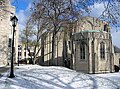 The Stephen Foster Memorial at the University of Pittsburgh contains two theaters
 -
 Although most of Foster's original lyrics and manuscripts are lost, a sketchbook of his artwork is preserved at the Memorial's research library at the Pitt.
 -
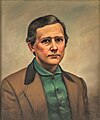 Painting of Foster at the National Mississippi River Museum & Aquarium


Statue controversy and later views[edit]
A 1900 statue of Foster by Giuseppe Moretti was located in Schenley Plaza, in Pittsburgh, from 1940 until 2018. On the unanimous recommendation of the Pittsburgh Art Commission, the statue was removed on April 26, 2018.[36] Its new home has not yet been determined. It has a long reputation as the most controversial public art in Pittsburgh "for its depiction of an African-American banjo player at the feet of the seated composer. Critics say the statue glorifies white appropriation of black culture and depicts the vacantly smiling musician in a way that is at best condescending and at worst racist."[37] A city-appointed Task Force on Women in Public Art called for the statue to be replaced with one honoring an African American woman with ties to the Pittsburgh community. The Task Force held a series of community forums in Pittsburgh to collect public feedback on the statue replacement and circulated an online form which allowed the public to vote for one of seven previously selected candidates or write in an alternate suggestion.[38] However, the Task Force on Women in Public Art and the Pittsburgh Art Commission have not reached an agreement as to who will be commemorated or if the statue will stay in the Schenley Plaza location.[39]
The musicologist Ken Emerson has suggested the presence of racism in some of Foster's lyrics.[40]
See also[edit]
Notes[edit]
- ^ His grandfather James Foster was an associate of John McMillan and a founding trustee of Canonsburg Academy, a predecessor institution to Jefferson College; his father William Barclay Foster attended Canonsburg Academy until age 16.[9]
References[edit]
- ^ "Stephen C. Foster As Man and Musician, The Life Story of the Sweet Singer of Pittsburg Told by His Contemporaries and Comrades". The Pittsburg Press. September 12, 1900 – via Newspapers.com.

- ^ Marks, Rusty (April 22, 2001), "On Television: Stephen Foster: Quintessential songwriter lived in music, died in ruin", Sunday Gazette-Mail, Gazette Daily Inc. via HighBeam Research, archived from the original on October 11, 2013, retrieved April 25, 2012,
The song, written in 1847, soon spread throughout the country. Foster decided to become a full-time songwriter, a vocation no one had bothered to pursue until then.
- ^ Pittsburgh Native Son and Songwriter Stephen Foster to be Inducted into Nashville Songwriters Hall of Fame Oct. 17., US Fed News Service, Including US State News. The Associated Newspapers of Ceylon Ltd. via HighBeam Research, October 16, 2010, archived from the original on October 11, 2013, retrieved April 25, 2012
- ^ Howard, John Tasker (March 1944). "The Literature on Stephen Foster". Notes: Quarterly Journal of the Music Library Association. 1 (2): 10–15. doi:10.2307/891301. ISSN 0027-4380. JSTOR 891301.
- ^ Root, Deane L. (March 1990). "The "Mythtory" of Stephen C. Foster or Why His True Story Remains Untold" (PDF). American Music Research Center. U. Colorado, Boulder. Retrieved September 25, 2018.
- ^ a b c Sanders, Paul (Fall 2008). "Comrades, Fill No Glass For Me: Stephen Foster's Medlodies As Borrowed by the American Temperance Movement" (PDF). Social History of Alcohol and Drugs. 23 (1): 24–40. doi:10.1086/SHAD23010024. S2CID 165454878. Archived from the original (PDF) on November 17, 2015. Retrieved October 13, 2015.
- ^ a b "Foster Hall Collection, Collection Number: CAM.FHC.2011.01, Guide to Archives and Manuscript Collections at the University of Pittsburgh Library System". University of Pittsburgh, Center for American Music. Retrieved October 13, 2015. Access provided by the University of Pittsburgh.
- ^ a b c Emerson, Ken (1998). Doo-dah! Steven Foster and the Rise of American Popular Culture. Da Capo Press. p. 79. ISBN 978-0-306-80852-4.[permanent dead link]
- ^ Vincent Milligan, Harold (1920). Stephen Collins Foster: a biography of America's folk-song composer. G. Schirmer. pp. 3–4.
- ^ Sisario, Ben (September 20, 1998). "On the Map; Stephen Foster's Old Hoboken Home". The New York Times. Retrieved July 4, 2016.
- ^ "American Experience | Stephen Foster | People & Events". Shoppbs.pbs.org. Archived from the original on April 27, 2022. Retrieved January 8, 2021.
- ^ a b Saunders (2012). "The Social Agenda of Stephen Foster's Plantation Melodies". American Music. 30 (3): 275–289. doi:10.5406/americanmusic.30.3.0275. JSTOR 10.5406/americanmusic.30.3.0275. S2CID 144617319.
- ^ a b c Root, Deane L. (March 12, 1990). "The 'Mythtory' of Stephen C. Foster or Why His True Story Remains Untold" (Lecture transcript at the American Music Center Research Conference). American Music Research Center Journal: 20–36. Retrieved October 4, 2015. Access provided by the University of Pittsburgh Library System
- ^ a b O'Connell, JoAnne (2016). The Life and Songs of Stephen Foster: a Revealing Portrait of the Forgotten Man Behind Swanee River, Beautiful Dreamer, and My Old Kentucky Home. Lanham, Maryland: Rowman and Littlefield. p. 321. ISBN 9781442253865.
- ^ "More about the film Stephen Foster". American Experience. PBS. Retrieved October 2, 2015.
- ^ O'Connell, JoAnne H. (2007). Understanding Stephen Collins Foster, His World and Music (PDF) (Thesis). University of Pittsburgh. Retrieved June 25, 2016.
- ^ Emerson, Ken (2010). Stephen Foster and Co.: Lyrics of America's First Great Popular Songs. New York: Library of America. p. 10. ISBN 978-1598530704.
- ^ W. Tomaschewski. ""The Last Chapter"". Stephen Collins Foster. W. Tomaschewski. Archived from the original on June 18, 2012. Retrieved August 4, 2012.
- ^ Barcousky, Len (February 14, 2016). "Eyewitness 1916: Living link to Foster passes on". Pittsburgh Post Gazette. Retrieved April 27, 2016.
- ^ ""Waters' Choral Harp: a new and superior collection of choice hymns and tunes, mostly new, written and composed for Sunday schools, missionary, revival, and social meetings, and for church worship 106. Who has our Redeemer heard"". Hymnary.org. Retrieved August 23, 2016.
- ^ "All around is bright and fair, While we work for Jesus". Hymnary.org. Retrieved August 23, 2016.
- ^ ""Blame, not those who weep and sigh"". Hymnary.org. Retrieved August 23, 2016.
- ^ Steel, David Warren (2008). "Foster, Stephen (1826–1864) Composer and Songwriter". The New Encyclopedia of Southern Culture; Volume 12: Music. University of North Carolina Press. pp. 229–230. ISBN 9780807832394. JSTOR 10.5149/9781469616667_malone.86. Access provided by the University of Pittsburgh
- ^ Whitburn, Joel, Top R&B Singles, 1942–1999, p. 74.
- ^ "The State Anthem: "Florida (Where the Sawgrass Meets the Sky)"". State of Florida. Retrieved April 29, 2011.
- ^ Paula Morgan (2001). "Jackson, Richard (Hammel)". Grove Music Online. Oxford Music Online. Oxford University Press. doi:10.1093/gmo/9781561592630.article.47105.
- ^ Lerner, Neil (September 2006). "Review: Tunes for 'Toons': Music and the Hollywood Cartoon by Daniel Goldmark". Notes: Quarterly Journal of the Music Library Association. 63 (1): 121–124. JSTOR 4487739.
- ^ "Stephen C. Foster's Blues". The Possum Trot Orchestra. Retrieved May 10, 2015.
- ^ "E.M.A. – California Lyrics". SongLyrics. Retrieved August 4, 2012.
- ^ White, Timothy (December 9, 2000). "Randy Newman's America: A Portrait of the Artist". Billboard. Vol. 112, no. 50. p. 17.
- ^ Lewis, Thomas P. (1991). A Source guide to the music of Percy Grainger (1st ed.). White Plains, New York: Pro/Am Music Resources. ISBN 9780912483566. OCLC 24019532.
- ^ "What Is It All but Luminous by Art Garfunkel | PenguinRandomHouse.com: Books". PenguinRandomhouse.com. Retrieved April 25, 2019.
- ^ Monger, James. "Wilderness – The Handsome Family". Allmusic.com. Retrieved July 8, 2013.
- ^ "1-cent Foster". Arago: people, postage & the post, Smithsonian National Postal Museum. Retrieved May 10, 2015.
- ^ "'Oh! Susanna' songwriter's statue removed from Pittsburgh park after criticism". NBC News. April 26, 2018. Retrieved April 25, 2019.
- ^ "'Oh Susanna' songwriter's statue removed amid criticism". Associated Press. April 26, 2018. Archived from the original on April 26, 2018. Retrieved April 26, 2018.
- ^ Majors, Dan (October 25, 2017). "City's art commission unanimous: Statue of Stephen Foster needs to go". Pittsburgh Post-Gazette. Retrieved May 5, 2018.
- ^ "City wants statue of African-American woman to replace Stephen Foster monument". Pittsburgh Post-Gazette. March 14, 2018. Retrieved September 16, 2018.
- ^ O'Driscoll, Bill (July 2, 2018). "Initiative To Honor Women Of Color With Public Art Sparks Debate". WESA. WESA. Retrieved September 16, 2018.
- ^ "The Lyrics and Legacy of Stephen Foster". NPR.org.

Further reading[edit]
- Emerson, Ken, ed. (2010). Stephen Foster & Co.: Lyrics of the First Great American Songwriters. New York: The Library of America. ISBN 978-1-59853-070-4. OCLC 426803667.
- Hamm, Charles (1983). Yesterdays: Popular Song in America. New York City: W. W. Norton & Co. ISBN 978-0393300628.
- Hodges, Fletcher Jr. (1939). A Pittsburgh Composer and His Memorial. Pittsburgh, Pennsylvania: Historical Society of Western Pennsylvania. ASIN B01A8YVHHM.
- Hodges, Fletcher Jr. (1948). The Research Work of the Foster Hall Collection. Philadelphia: University of Pennsylvania Press.
- Hodges, Fletcher Jr. (1958). The Swanee River and a Biographical Sketch of Stephen Collins Foster. Whitefish, Montana: Literary Licensing. ISBN 978-1258193980.
- Howard, John Tasker (March 1944). "The Literature on Stephen Foster". Notes: Quarterly Journal of the Music Library Association. 1 (2): 10–15. doi:10.2307/891301. JSTOR 891301.
- Howard, John Tasker (1945). Stephen Foster: America's Troubadour. New York City: Tudor Publishing Company. ASIN B0007ELPPI.
- Milligan, Harold Vincent (1920). Stephen Collins Foster: A Biography Of America's Folk-Song Composer. Whitefish, Montana: Kessinger Publishing. ISBN 978-0548971864.
- Morneweck, Evelyn (1973). Chronicles of Stephen Foster's Family. Associated Faculty Press. ISBN 978-0804617420.
- O'Connell, JoAnne (2016). The Life and Songs of Stephen Foster: a Revealing Portrait of the Forgotten Man Behind Swanee River, Beautiful Dreamer, and My Old Kentucky Home. Lanham, Maryland: Rowman and Littlefield. p. 321. ISBN 9781442253865.
- "Foster Hall Collection". Center for American Music; University of Pittsburgh. Retrieved March 24, 2017.
- "Pictorial Biography of Stephen Collins Foster" (PDF). Musical Courier. 1930. Retrieved March 24, 2017.
External links[edit]
 Media from Commons
 Quotations from Wikiquote
 Texts from Wikisource


- Free scores by Stephen Foster at the International Music Score Library Project (IMSLP)
- Works by or about Stephen Foster at Internet Archive
- Stephen Foster at IMDb
- Stephen Foster at Find a Grave
- Archives of Stephen Foster at the University of Kentucky
- Stephen Foster discography at Discogs
- Pittsburgh Music History Archived March 21, 2019, at the Wayback Machine
- Hymns and songs by Stephen Foster
- Stephen Collins Foster recordings at the Discography of American Historical Recordings.
Music scores
- Sheet music for "I see her still in my dreams", Macon, GA: John C. Schreiner & Son, from the Confederate Imprints Sheet Music Collection
- Sheet music for "Parthenia to Incomar", Macon, GA: John C. Schreiner & Son, from the Confederate Imprints Sheet Music Collection
- "The Melodies of Stephen C. Foster" (online version) Pittsburgh, PA: T.M. Walker, Full sheet music book, 307 pages
| Songs |
|  |
|---|---|---|
| History and biographers | ||
| Films, musicals, recordings |
| |
| State Parks | ||
| Family | ||
| Related | ||
| International | |
|---|---|
| National | |
| Academics | |
| Artists | |
| People | |
| Other | |

- Stephen Foster
- 1826 births
- 1864 deaths
- 19th-century American composers
- 19th-century American male musicians
- Accidental deaths in New York (state)
- Accidental deaths from falls
- American lyricists
- American male composers
- American male songwriters
- American people of Scotch-Irish descent
- American people of English descent
- Blackface minstrel songwriters
- Burials at Allegheny Cemetery
- Hall of Fame for Great Americans inductees
- Musicians from Pittsburgh
- Songwriters from Pennsylvania
- Washington & Jefferson College alumni