


Temple University
 | |
Former names | The Baptist Temple (1884–1888) The Temple College of Philadelphia (1888–1907) |
|---|---|
| Motto | Perseverantia Vincit (Latin) |
Motto in English | "Perseverance Conquers" |
| Type | Public state-related research university |
| Established | May 12, 1888 (official date it was chartered; institution roots began 1884 with church classes) |
| Founder | Russell Conwell |
| Accreditation | MSCHE |
Academic affiliations | |
| Endowment | $778 million (2022)[1] |
| Chancellor | Richard M. Englert (Honorary) |
| President | Richard M. Englert (acting) |
| Provost | Gregory Mandel |
Academic staff | 1,487 part-time; 2,271 full-time (Fall 2020)[2] |
Administrative staff | 4,471 (Fall 2020)[2] |
| Students | 37,365 (Fall 2020)[2] |
| Undergraduates | 27,307 (Fall 2020)[2] |
| Postgraduates | 10,058 (Fall 2020)[2] |
| Location | , , United States |
| Campus | Large city[3], 115 acres (47 ha) (main campus) |
| Other campuses | |
| Newspaper | The Temple News |
| Colors | Cherry and white[4] |
| Nickname | Owls |
Sporting affiliations | |
| Mascot |
|
| Website | temple |
 | |
Temple University (Temple or TU) is a public state-related research university in Philadelphia, Pennsylvania. It was founded in 1884 by the Baptist minister Russell Conwell and his congregation Grace Baptist Church of Philadelphia then called Baptist Temple.[5] On May 12, 1888, it was renamed the Temple College of Philadelphia. By 1907, the institution had revised its institutional status and been incorporated as a research university.[6][7]
As of 2020,[update] about 37,289 undergraduate, graduate and professional students were enrolled at the university.[2] Temple is among the world's largest providers of professional education, preparing the largest body of professional practitioners in Pennsylvania.[8][9]
History[edit]


Temple University was founded in 1884 by Grace Baptist Church of Philadelphia[5] and its pastor Russell Conwell, a Yale-educated lawyer, orator, and ordained Baptist minister, who had served in the Union Army during the American Civil War. Conwell came to Pennsylvania in 1882 to lead the Grace Baptist Church of Philadelphia while he began tutoring working class citizens late at night to accommodate their work schedules. These students, later dubbed "night owls", were taught in the basement of Conwell's Baptist Temple (hence the origin of the university's name and mascot).
The Grace Baptist Church of Philadelphia quickly grew popular within the North Philadelphia area. When the board of trustees conducted its first meeting they named Russell H. Conwell president of "The Temple College." Grace Baptist Church appointed a new board of trustees within the following months, printed official admissions files, and issued stock to raise funds for new teaching facilities. The church provided classrooms, and teachers, and financed the school in its early years. The church and Conwell's desire was "to give education to those who were unable to get it through the usual channels".[10]
In addition to the congregational giving and supporting the college, Conwell used the income from his "Acres of Diamonds" speech to fund Temple[10] as a place where working-class Philadelphians might receive higher education.
Philadelphia granted a charter in 1888 to establish "The Temple College of Philadelphia", but the city refused to grant authority to award academic degrees. By 1888, the enrollment of the college was nearly 600. It was in 1907 that Temple College revised its institutional status and incorporated as a university. Legal recognition as a university enhanced Temple in noticeable ways including its reputation, professional and graduate programs, overall enrollment, and financial support.[10]
Over time, Temple expanded. The Grace Baptist Church of Philadelphia also founded Samaritan Hospital, and Garretson Hospitals, a medical school was added, and Temple merged with the Philadelphia Dental College.[10] After the merger, Temple officially reincorporated as Temple University on December 12, 1907.
In 1954, Temple University agreed to terms to purchase 11½ acres of the adjacent Monument Cemetery and repurpose it for athletic fields and a parking lot.[11] Families of the deceased claimed about 8,000 of the 28,000 bodies on the site and the rest were moved to an unmarked mass grave at Lawnview Memorial Park.[12] Many of the remaining headstones from the cemetery, including a monument to George Washington and Marquis de Lafayette, were used as riprap for the Betsy Ross Bridge, some of which can be still be seen at low tide.[13]
Since 1965, Temple has been a Pennsylvania state-related university, meaning the university receives state funds, subject to state appropriations, but is independently operated.[14]
On November 29, 2021, the former dean of Temple University's business school was convicted on charges of conspiracy and wire fraud for a scheme in which he and others used false data to boost the school's position on the US News and World Report's rankings.[15][16][17]
On January 31, 2023, the graduate student workers' union at Temple University declared an ongoing labor strike, following a year of stalled negotiations for a labor contract. Temple University retaliated on February 8 by terminating the strikers' health insurance and tuition benefits, an action that propelled the strike to national news.[18] The strike ended in mid-March.[19]
Shortly after graduate student strike ended, university president Jason Wingard resigned. In the months prior to his resignation, he had come under fire for his decisions during the strike as well as a rise in crime and violence on and near the university's campus. Shortly before his resignation, the university's board of trustees had announced increased oversight of the university. The university's faculty had also planned a no-confidence vote.[20] JoAnne Epps agreed to postpone her planned retirement and was named Acting President on April 11, 2023. Epps died after suffering a sudden, as yet undisclosed, medical episode during a university event on September 19, 2023.
Campus[edit]
.jpg)
Temple University has six campuses and sites across Pennsylvania, plus international campuses in Rome and Japan.[2]
Pennsylvania campuses[edit]
Main campus[edit]

The main campus is in North Philadelphia, about 1.5 miles (2.4 km) north of Center City. It occupies 163.58 acres (66.20 ha).
The campus has landmarks which have accrued over its history. O'Connor Plaza surrounds the Founder's Garden between Polett Walk and Liacouras Walk.[21] The bronze statue of an owl, the university's mascot, is at the centre of main campus.[22]
The Founder's Garden near Liacouras Walk is the burial place of Russell Conwell, founder and 38-year president of Temple.[22] A bust of Conwell marks his grave. The Bell Tower is a landmark of the campus. It's 96 feet (29 m) tall and located in the center of the Main Campus between Paley Hall and Beury Hall. The surrounding plaza and grassy area is commonly referred to as "the Beach" or "Beury Beach".[23]
Another green area on Main Campus is the Johnny Ring Garden. It is located near Mitten Hall and features a statue of Johnny Ring, Conwell's personal orderly during the Civil War.[24]
Other campuses[edit]
Health Sciences Campus in North Philadelphia covers about 20 acres and extends to either side of North Broad Street from Allegheny Avenue to just above Tioga Street. The campus is home to Temple University Hospital, a teaching hospital; the Lewis Katz School of Medicine; the School of Pharmacy; the Maurice H. Kornberg School of Dentistry; and the College of Public Health.[25]
Podiatric Medicine Campus is located at 8th and Race Streets. The Foot and Ankle Institute, the School of Podiatric Medicine, as well as the Shoe Museum, are at this location.[26]
Center City Campus is across the street from Philadelphia City Hall. The Campus offers undergraduate and graduate courses and full degree programs in the evening, as well as non-credit workshops and seminars.[27]
Ambler Campus, originally a junior college, has 325 faculty and 4,600 students, with bachelor's and master's degree programs on a site with a 187-acre (757,000 m2) arboretum, 13 miles (21 km) from Temple's main campus in Ambler, Pennsylvania.
Temple University Harrisburg (TUH), located in Harrisburg, Pennsylvania, has a variety of graduate degree programs, certificate and professional development programs.[28] The campus has an evening and weekend course schedule designed for working adults. The campus is located within the Strawberry Square complex.[28]
International campuses[edit]
Temple University, Japan Campus[edit]
Temple University, Japan Campus (TUJ) is a branch campus in Setagaya-ku, Tokyo, Japan. Temple University Japan was the oldest and largest campus of any foreign university in Japan, before its move from Minato-ku.[29]
In addition to its core undergraduate program, TUJ has graduate programs in law, business, and education; an English-language preparation program; continuing education courses; and corporate education classes. Temple University Japan became the first recognized foreign university campus in Japan. TUJ's credits and degrees are recognized[by whom?] as being equivalent to those of Japanese universities and it can sponsor visas for international students.[citation needed] Students are also given Japanese student identification cards.[29]
Temple University Rome[edit]
The Temple Rome campus is in the Villa Caproni, just north of Piazza del Popolo. The Villa Caproni has living accommodations, shops and restaurants. Its facilities include a 15,000-volume library, a computing center, academic classrooms, art and architecture studios, an art gallery and student lounges.[30]
Campus police[edit]
The Temple University Police department is the largest university police force in the United States, with 130 campus police officers, including supervisors and detectives.[31][32] All are Pennsylvania-certified law enforcement officers; each receives state-mandated police recruit training at an accredited state police academy.[33]
The campus has more than 600 security cameras and more than a thousand 1000-watt metal halide lamps mounted on campus roofs to mimic daylight.[34] Temple has two mass notification systems for emergencies, TUalert and TUsiren.[35]
In March of 2023, Temple received a public safety grant worth nearly $1.8 million to improve campus safety.[36]
Sustainability[edit]
The Office of Sustainability[37] was established on July 1, 2008,[38] as a central resource focusing on four key areas: operations, academics, research, and outreach and engagement.
The Ambler campus' "Ambler College", which is home to the Community and Regional Planning, Landscape Architecture, and Horticulture Departments, changed its name in 2009 to the School of Environmental Design. The campus is also home to the Center for Sustainable Communities, a Sustainability-based research center.[39]
Since 2008, the university has enacted policies that include purchasing from green vendors and conserving water and energy across campus;[40] offered 46 undergraduate courses, 22 graduate courses and 12 General Education courses focusing on the environment and sustainability; set in place programs to administer grants and offer incentives for any research related to the environment or sustainability;[41] and offered programs to help create a green culture, both at Temple and beyond.[42][43][44]
Campus development[edit]
The university in 2014 adopted a new campus plan, Visualize Temple, with signature projects including a new library and quad in the heart of campus.[45] A companion project, Verdant Temple, was announced in 2015 as a university strategy for updating and beautifying the school's open spaces, walkways and landscaping.[46]
Projects[edit]

The Architecture building opened January 2012. The design incorporates a glass curtain wall exterior "skin" that allows daylight in to interior studios and classrooms while also providing views of the surrounding urban environment. The open plan of the structure enables collaboration within the design studios.[47]
Science and Education Research Center was complete in spring of 2014. The project will attain LEED Silver certification, and possibly LEED Gold certification due to the innovative design of the facility and the site.[48]
Libraries[edit]

The Paley Library opened in 1966 and was designed, as common at the time, as a book warehouse rather than a modern academic library.[49] After being supplanted by the Charles Library, the building was renamed to Samuel Paley Hall and subsequently housed the College of Public Health, as well as the campus bookstore, relocated from the Student Center.[49]
On August 25, 2019, the university opened Charles Library, a four-story tall study facility. The building was designed by international architectural design office, Snøhetta.[50] As of 2020[update], the library holdings amounted to 4 million physical items, including 1.5 million books, and 1.5 million electronic books.[49] The library includes both an automated search and retrieval system and browsable stacks for physical volumes.[49] The library is open to the general public.[49]
Academics[edit]

Temple University is classified among "R1: Doctoral Universities – Very high research activity",[51] and has more than 500 degree programs at 15 schools and colleges and five professional schools including dentistry, law, medicine, pharmacy, and podiatric medicine.[52]
Schools and colleges[edit]
Boyer College of Music and Dance[edit]

The Boyer College of Music and Dance is part of the Center for the Performing and Cinematic Arts at Temple University in Philadelphia, Pennsylvania, in close proximity to the city's historic cultural institutions, including the Kimmel Center for the Performing Arts, The Philadelphia Orchestra, Opera Philadelphia, Pennsylvania Ballet, Philadanco and the Philadelphia Museum of Art.[53] The Boyer College of Music and Dance is housed in Presser Hall.
College of Engineering[edit]
The College of Engineering at Temple University includes five departments: Bioengineering, Civil & Environmental Engineering, Electrical & Computer Engineering, Mechanical Engineering, and Center for Engineering, Management & Technology. The college offers eight undergraduate programs (B.S.) and seven graduate programs (M.S., Ph.D.).[54]
College of Liberal Arts[edit]
The College of Liberal Arts at Temple University includes 28 academic departments, offering 35 undergraduate majors and 36 minors. The College of Liberal Arts is housed in Mazur (formerly Anderson) and Gladfelter Halls.
The Criminal Justice department is one of the leading criminal justice programs in the United States.[55] The college offers 15 master's degrees and 13 doctoral programs.[56]
College of Public Health[edit]
Temple University's College of Public Health includes the departments of Communication Sciences and Disorders, Epidemiology and Biostatistics, Health and Rehabilitation Sciences, Health Services Administration and Policy, Kinesiology, Nursing, Social and Behavioral Sciences and the School of Social Work. It is one of the largest colleges of public health in the United States. The College of Public Health offers bachelor's, master's and doctoral degrees as well as certificate programs.
The College of Public Health's department is housed inside the Bell Building (TECH Center).
College of Science and Technology[edit]
Temple University's College of Science and Technology houses the departments of Biology, Chemistry, Computer & Information Sciences, Earth & Environmental Science, Mathematics, and Physics. It is one of the largest schools or colleges of its kind in the Philadelphia region with more than 230 faculty and 4,000 undergraduate students.[57]
The College of Science and Technology offers bachelor's, master's, and doctoral degrees in all six departments as well as science with teaching bachelor's degrees through the TUteach program. CST's advanced Science Education and Research Center (SERC), which opened in 2014, is 247,000 square feet research center, home to 7 research center and institutes. SERC has 52 research labs and 16 teaching rooms, and cost $137 million.[58]
The College of Science and Technology's Biology department is housed in the BioLife building, while the Chemistry and Earth & Environmental Science departments are housed in Beury Hall. The Mathematics department is housed in Wachman Hall, while the Physics and Computer Science departments are housed in SERC.
Fox School of Business[edit]

The Fox School offers 15 undergraduate majors, 19 minors, 10 professional master's programs, and two PhD programs, and the school has a variety of international partnerships.[59]
It ranked in the top 30 in the nation in the 2017 Times Higher Ed World University Rankings and top 80 in the world for undergraduate studies.[60] The Fox School of Business is housed in Alter Hall.
On March 9, 2020, the Department of Veterans Affairs suspended G.I. Bill reimbursement eligibility for Temple University and several other schools due to what the V.A. said were "erroneous, deceptive, or misleading enrollment and advertising practices", giving the schools 60 days to take "corrective action". The Philadelphia Inquirer states that the action is a result of misreporting by the Fox School of Business.[61] The VA withdrew its threat of sanctions in July 2020.[62]
Klein College of Media and Communication[edit]
Klein College of Media and Communication (formerly, the School of Media and Communication) is one of the largest and most comprehensive schools of media and communication in the country. The school has about 3,000 undergraduate and graduate students, more than 20,000+ alumni, and more than 60 full-time faculty members.[citation needed]
The School of Media and Communication was renamed the Klein College of Media and Communication on in 2017, in tribute to broadcasting pioneer Lew Klein, who died in June 2019.[63][64]
Lewis Katz School of Medicine[edit]

In July 2014, Lewis Katz School of Medicine scientists were the first to remove HIV from human cells.[65]
In October 2015, the school of medicine was officially named the Lewis Katz School of Medicine at Temple University in honor of Temple alumnus and former trustee Lewis Katz.[66]
School of Pharmacy[edit]
The Temple University School of Pharmacy (TUSP), on the Health Science Campus of Temple University in Philadelphia, is one of six schools of pharmacy in Pennsylvania conferring the doctor of pharmacy (Pharm.D.) degree. It also confers the Ph.D. (doctor of philosophy) and M.S. (master of science) degrees in pharmaceutical sciences.
Tyler School of Art and Architecture[edit]
The Tyler School of Art and Architecture was founded in Elkins Park, Pennsylvania, in the 1930s, when Stella Elkins Tyler donated her estate to Temple University. Tyler moved to a state-of-the-art facility at Temple's Main Campus in Philadelphia in 2009.[67] In 2019, more than 20 years after Temple's Architecture programs became part of Tyler, the school expanded its name, becoming the Tyler School of Art and Architecture.[68]
Tyler was ranked number 15 in fine art schools in the United States by U.S. News & World Report in 2016.[69]
School of Theater, Film and Media Arts[edit]
The School of Theater, Film and Media Arts (TFMA) is part of the Center for the Performing and Cinematic Arts at Temple University, which also includes the Boyer College of Music and Dance.[70] Along with the Center, TFMA was created in 2012.[70]
TFMA offers BA and BFA programs in 13 concentrations in disciplines from musical theater to cinematography, screenwriting to theater design.[71][72] Graduate programs include MFA programs in Film and Media Arts, Musical Theater Collaboration, Acting, Design, Directing and Playwriting, as well as MA programs in Media Arts and Musical Theater Studies, and a PhD in Documentary Arts and Visual Research.[73][74]
Beasley School of Law[edit]

The Beasley School of Law was founded in 1895.[75] With an enrollment of approximately 650 students in Fall 2023, the school trains students with programs focused on trial advocacy, transnational law, and taxation, among others.[75][76] The school offers full- and part-time programs, offering evening classes for working students.[77] As of 2024, U.S. News & World Report ranked the school the tied for 54th best law school in the United States.[78]
College of Education and Human Development[edit]
The College of Education and Human Development has more than 2,140 students (undergraduate, graduate programs, and non-matriculated students).[75] Founded in 1919, the college is organized into three departments: Teaching & Learning, Policy, Organizational & Leadership Studies, and Psychological Studies in Education.[79] The college has a longstanding relationship with the School District of Philadelphia, helping to teach and prepare future educators for the city.[79] The College of Education is housed in Ritter Hall.
School of Social Work[edit]
Temple's School of Social Work, part of the College of Public Health, offers full-time, part-time and online programs.[80] It had an enrollment of more than 600 students in Fall 2017.[75]
School of Podiatric Medicine[edit]
Temple's School of Podiatric Medicine is a school of podiatry. The school's Foot and Ankle Institute is the largest podiatric medical treatment facility anywhere, logging more than 40,000 patient visits annually.[81] Students also train through programs through Temple University Health System.[81]
Maurice H. Kornberg School of Dentistry[edit]
The Kornberg School of Dentistry, established in 1863, is the second oldest dental school in continuous existence in the United States.[82][83][75] The school's clinic offers services including routine dental care and prevention to children's dentistry, orthodontics, emergency care, and implants.[83]
School of Sport, Tourism, and Hospitality Management[edit]
The School of Sport, Tourism and Hospitality Management[84] houses the Sport Industry Research Center and the U.S.–Asia Center for Tourism & Hospitality Research.[85] More than 1,100 students were enrolled in its undergraduate and graduate programs as of Fall 2017.[75]
Foreign study[edit]
Temple offers study-abroad opportunities at its campuses in Rome and Tokyo, and semester and summer programs in London, Rome, Japan, Dublin, Germany, France, China, South Africa, Spain, Ecuador, and Australia.[86] Temple University has a global internship program, offering internships in Spain, Costa Rica, Australia, India, Chile, China, Singapore, and various U.S. cities[87]
Technology[edit]
In January 2006, the university opened the TECH Center, a 75,000 sq ft (7,000 m2) technology facility.[88]
Rankings[edit]
| Academic rankings | |
|---|---|
| National | |
| ARWU[89] | 100–117 |
| Forbes[90] | 376 |
| U.S. News & World Report[91] | 89 |
| Washington Monthly[92] | 180 |
| WSJ / College Pulse[93] | 166 |
| Global | |
| ARWU[94] | 401–500 |
| QS[95] | 721–730 |
| THE[96] | 351–400 |
| U.S. News & World Report[97] | 312 |
In U.S. News & World Report's 2024 rankings, Temple is tied for 89th among all national universities.[98][99] Temple undergraduate college is among the top colleges profiled in The Princeton Review's The Best 382 colleges (2018).[100] Temple's Arts and Humanities faculty, Social Science and Management faculty, Life Science and Medicine faculty are ranked 182nd, 339th, 350th respectively in the world in 2014 by QS World University Rankings.[101][102][103] Temple's Social Science faculty is also ranked 51–75 in the world in 2016 by ARWU.[104]
In 2017, Temple received $268.4 million in research funding, ranking it 85th out of 901 institutions in the NSF's Higher Education Research and Development Survey.[105]
Student life[edit]
| Race and ethnicity[106] | Total | ||
|---|---|---|---|
| White | 55% | ||
| Black | 14% | ||
| Asian | 13% | ||
| Hispanic | 8% | ||
| Other[a] | 6% | ||
| Foreign national | 4% | ||
| Economic diversity | |||
| Low-income[b] | 28% | ||
| Affluent[c] | 72% | ||

As of 2018, about 11,000 students live on or around Temple's main campus. University officials have tried various strategies, including building facilities, to encourage students, faculty, and staff to live and work nearby.[107]
Recreational facilities on and around main campus include the Howard Gittis Student Center, which has a movie theater, food court, underground multi-purpose room, game room, computer lounge, and meeting and office space for student groups and organizations. Exercise facilities include the Independence Blue Cross Student Recreation Center (commonly referred to as IBC), which provides 59,000 square feet (5,500 m2) of fitness facilities; the Student Pavilion, a 4-court field house for volleyball, basketball, badminton, floor hockey, indoor soccer, tennis, golf, and more; and Pearson/McGonigle, TU Fitness, and the Geasey Field Complex. The Recreation Center is part of the Liacouras Center, which also includes the home court of the Temple basketball team and various entertainment venues.
In 2017, the Aramark Student Training and Recreation Complex (commonly referred to as STAR) was built, which includes a new climbing wall and the weight room. There is also academic classrooms for the College of Public Health, administrative offices, a juice bar, and a 75-yard turf field.
Traditions[edit]
- Cherry and White
Cherry and White are the official school colors of Temple University. Cherry is a common motif at Temple, from the Cherry Crusade fan club to the Cherry and White Directory. In 2008, Temple standardized the cherry color to be Pantone Matching System (PMS) 201.[108]
- The Temple "T"
The university's symbol, the Temple "T", was designed by students in a graphic arts and design class in the Tyler School of Art and Architecture in 1983. The "T" represents strength and positive character, with the open ends showing the free exchange of ideas that is the hallmark of a Temple education.[109] The Temple T is referenced in the school's cheer, T For Temple U.
- The Owl
The owl has been the symbol and mascot for Temple University since its founding in the 1880s, making it the first school in the United States to adopt the owl as its symbol.[110] The nocturnal hunter symbolized Temple's early mission as a night school for ambitious young people of limited means. Russell Conwell encouraged these students, saying, "The owl of the night makes the eagle of the day." In 1977, Temple introduced "Victor T. Owl", a costumed mascot, which was then renamed Hooter in 1984, and has remained Temple's mascot at sports games and events since.[111] Stella, Temple's live owl mascot, was hatched in 2009 in Washington State and raised by a master falconer.[112] She arrived in Pennsylvania in 2011 and lives in the Elmwood Park Zoo in Norristown, Pennsylvania. Stella is one of two live owl mascots in Division I athletics, the other being Florida Atlantic University's Hera.[113]
Fraternities and sororities[edit]
28 Greek organizations are part of the Temple University Greek Association; some claim than more than 1,600 undergraduates are members.[114]
Student organizations[edit]
Temple University has more than 300 student organizations for a variety of interests academic, professional, political and advocacy, service, religious, cultural and international, arts, entertainment, recreation and leisure, and media and publishing.[115]
- Temple University Graduate Students' Association
The Temple University Graduate Students' Association (TUGSA), which is affiliated with the American Federation of Teachers and the AFL-CIO, is the only recognized graduate student employee union in Pennsylvania. Formed in 1997, TUGSA is a union that advocates for graduate students that are employed by the university as teaching or research assistants.[116]
- Main Campus Program Board
The Main Campus Program Board is a student-run organization that plans the premiere events for the Temple student body. They specialize in large-scale events for the student community on Main Campus, organize trips to locations throughout the region, plan student Homecoming events including the annual Homecoming concert, and host speakers, comedians, and novel events.[117]
- Media
The Temple News is the editorially independent weekly newspaper of Temple University. It prints 5,000 copies to be distributed primarily on Temple's Main Campus every Tuesday. A staff of 25 plus more than 150 writers design, report and edit the 20-page paper.[118] In 2008, the paper's Web site, temple-news.com, received the National Online Pacemaker Award from the Associated Collegiate Press.[119] In 2015, the paper also won the print counterpart, the National Pacemaker Award.[120] In 2009, the paper's staff won eight Keystone Press Awards.[121] Templar, Temple University's annual undergraduate yearbook, was created in 1924.[122] During 2017, the yearbook received a national second-place award from the American Scholastic Press Association.[123] WHIP, an acronym that stands for We Have Infinite Potential, is Temple University's student radio station. It started broadcasting using Carrier Current in the Student Center before moving its studios to the TECH center. WHIP also gets increased visibility in a top-five media market as one of iHeartRadio's top college radio stations. Temple also has TUTV, a digital cable station that broadcasts to Philadelphia. TUTV features programs from Klein College School of Media and Communication, other colleges and schools at Temple, community and professional broadcasting partners.[124]
Athletics[edit]
Temple University's sports teams are the Owls: a name born from Temple's early days when it was a night school. The sports teams all participate in the NCAA's Division I and the American Athletic Conference (The American). The Owls moved after spending the previous 31 years in the Atlantic 10 Conference (A-10). The field hockey team are affiliate members of the Big East Conference. The Owls are also part of the Philadelphia Big 5, the Philadelphia-area basketball rivalry. Temple University was among the first institutions in the United States to sponsor extracurricular athletic activities for its students when both the football and basketball programs were inaugurated in 1894 under the direction of Coach Charles M. Williams.[125]
Football[edit]
Temple's football program dates back to 1894 and currently plays Division I FBS football in the American Athletic Conference.[126]
On December 17, 2012, Matt Rhule [pronounced rule] was named Temple's 26th head football coach. He had most recently served as the assistant offensive line coach with the New York Giants. Rhule was an assistant coach for the Owls for six seasons, ending in 2010–11 when the program went 9–4 and played in the fourth bowl game in school history, the Gildan New Mexico Bowl, where the Owls defeated Wyoming, 37–15 – Temple's first postseason victory since the 1979 Garden State Bowl.[127] In 2015, they posted a school-record-tying 10 wins and 4 losses.[128]
Temple won the 2016 American Athletic Conference Football Championship Game to secure its first conference championship since 1967. On December 13, 2016, Geoff Collins was named Temple's 27th head football coach. Before taking the position, Collins had served as defensive coordinator for the University of Florida Gators that ranked among the nation's best during his two seasons on staff.[129] Collins took the Temple Owls to the Bad Boy Mowers Gasporilla Bowl in 2017 in which the Owls defeated the Florida International Golden Panthers 28 to 3.[130]
The team is currently coached by Stan Drayton.
Men's basketball[edit]

The Temple Men's basketball program was ranked fifth in all-time NCAA wins with 1,903 starting the 2017–2018 season. Only Kentucky, Kansas, North Carolina, and Duke have a higher total.
Temple is recognized as having won the first-ever National Collegiate basketball championship in 1938, under Coach James Usilton. That Owls team, which finished with a 23–2 record, won the inaugural National Invitation Tournament by routing Colorado, 60–36, in the championship final. Because the NCAA Tournament was not held until the following year, Temple's NIT championship earned the Owls the first national college basketball title. During the 1950s, the Temple basketball team made two NCAA Final Four appearances (1956 and 1958) under Head Coach Harry Litwack. Litwack would be inducted into the Basketball Hall of Fame after concluding a 21-year coaching career that included 373 wins.[131]
Head Coach John Chaney, who is also a Hall of Fame coach, won a total of 724 career games and took Temple to the NCAA tournament 17 times. His 1987–88 Owls team entered the NCAA tournament ranked No. 1 in the country, and he has reached the Elite Eight on five occasions. He was consensus national coach of the year in 1988.[131]
On April 10, 2006, University of Pennsylvania head coach and La Salle University alumnus Fran Dunphy was named the new Temple's men's head basketball coach after Chaney's retirement in conclusion of the 2006 season. Dunphy had coached the Quakers for 17 straight seasons prior to the move. Dunphy and the Owls won three straight Atlantic-10 tournaments in 2008, 2009 and 2010, with the third marking a conference-leading ninth A-10 title. In the 2011–12 season, the Owls won the A-10 regular season title.[132]
The team is currently coached by Adam Fisher.
Alumni and faculty[edit]
There are more than 320,000 Temple alumni currently living in 50 states and 143 countries.[133] Temple has many notable alumni, such as Bill Cosby,[134] Bob Saget,[135] Daryl Hall, John Oates,[136] Irvin Kershner[137] and Diplo.[138] Temple University employs over 3,100 educators and has a student to faculty ratio of 14:1.[139]
-
 Bill Cosby, comedian
 -
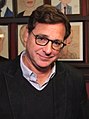 Bob Saget, actor and comedian
 -
 Tom Sizemore, actor and producer
 -
 Adam McKay, producer
 -
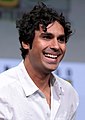 Kunal Nayyar, actor
 -
 Jesse Williams, actor
 -
 Daryl Hall, singer
 -
 Tamron Hall, journalist and talk show host
 -
 Diplo, DJ and songwriter
 -
 Tim Heidecker, comedian and director
 -
 Veronica Hamel, actress and model
 -

-
 David Brenner, comedian
 -
 Richard L. Fox, attorney
 -
 Kevin Negandhi, anchor for ESPN's SportsCenter
 -
 Patricia Wettig, playwright
 -

-
 Norman Fell, actor
 -
 Da'Vine Joy Randolph, actress
 -
 Mark Levin, radio show host
 -

-
 Malcolm Kenyatta, Pennsylvania State Representative
 -
 Robby Anderson, NFL player
 -
 Aaron McKie, former NBA player
 -
 Marc Lamont Hill, political commentator
 -
 Quinta Brunson, actress
_(cropped_to_Cosby).jpg)


.jpg)


.jpg)

.jpg)


.jpg)
_(cropped).jpg)

.jpg)
.jpg)
.jpg)


_(cropped).jpg)
.jpg)


See also[edit]
- List of colleges and universities in Philadelphia
- Universiti Tunku Abdul Rahman,[140] a partner in Malaysia
- Japan Campus of Foreign Universities
Notes[edit]
- ^ Other consists of Multiracial Americans & those who prefer to not say.
- ^ The percentage of students who received an income-based federal Pell grant intended for low-income students.
- ^ The percentage of students who are a part of the American middle class at the bare minimum.
References[edit]
- ^ As of March 7, 2022. U.S. and Canadian Institutions Listed by Fiscal Year 2021 Endowment Market Value and Change in Endowment Market Value from FY20 to FY21 (Report). National Association of College and University Business Officers and TIAA. 2022. Retrieved June 5, 2023.
- ^ a b c d e f g "Temple at a glance" (PDF). temple.edu. Retrieved 2021-08-24.
- ^ "IPEDS-Temple University".
- ^ "Brand Tone | Strategic Marketing | Temple University". Retrieved 2017-04-14.
- ^ a b Phillips, Tamra (2022). Faith Walks and Talks: The 150-Year History of Grace Baptist—The Church That Founded Temple University. Blue Bell: Decentagen Publishing.
- ^ "Carnegie Classifications | Institution Profile". Carnegieclassifications.iu.edu. Retrieved 2017-01-21.
- ^ "Temple University reaches height of Carnegie research classification | Temple Now". News.temple.edu. 2016-02-02. Retrieved 2017-01-21.
- ^ "Temple University Fall 2013 Student Profile" (PDF). Retrieved October 30, 2015.
- ^ "Temple Mission". Archived from the original on 2008-10-30. Retrieved 2008-10-09.
- ^ a b c d "Temple: The Story of an Urban University" (PDF). 2006-02-10. Archived from the original (PDF) on 2006-02-10.
- ^ Dembele, Marian (11 November 2014). "Before there was Geasey, there were tombstones". temple-news.com. Retrieved 13 March 2021.
- ^ Puckett, John L. & Mark Frazier Lloyd. Becoming Penn: The Pragmatic American University, 1950–2000, p. 345 (2015)
- ^ Barley, Luke (28 June 2012). How Thousands of Headstones Ended Up Under a Philadelphia Bridge, City Lab
- ^ "State-Related Universities". Pennsylvania Department of Education. Retrieved April 9, 2013.
- ^ "Former dean of Temple University convicted of fraud for using fake data to boost its national ranking". CNN. 30 November 2021. Archived from the original on 7 September 2022.
- ^ "Eastern District of Pennsylvania | Former Temple Business School Dean Sentenced to Over One Year in Prison for Rankings Fraud Scheme | United States Department of Justice". justice.gov. 2022-03-11. Retrieved 2023-12-27.
- ^ Snyder, Jeremy Roebuck | Susan (2022-03-11). "Temple's former business school dean was sentenced to 14 months in rankings scandal fraud". Inquirer. Retrieved 2023-12-27.
- ^ "Temple University cuts tuition and health benefits for striking graduate students". NPR. 10 February 2023.
- ^ Quinn, Ryan (March 14, 2023). "Temple Strike Ends After Grad Students Accept Deal". Inside Higher Ed. Retrieved March 29, 2023.
- ^ Moody, Josh; Greenberg, Susan H. (March 29, 2023). "Temple University President Resigns". Insider Higher Ed. Retrieved March 29, 2023.
- ^ "O'Connor Plaza and renovated Founder's Garden to officially open Sept. 14". Temple Now | news.temple.edu. 2017-09-13. Retrieved 2018-02-27.
- ^ a b "O'Connor Plaza and renovated Founder's Garden to officially open Sept. 14". Temple Now | news.temple.edu. 2017-09-13. Retrieved 2018-03-08.
- ^ Zizzi, Alexa (May 2018). "12 Things You See At Temple's Beury Beach". odyssey. Odyssey. Retrieved 22 March 2020.
- ^ "CONTENTdm". digital.library.temple.edu.
- ^ "Health Sciences Center". Temple University.
- ^ "About | School of Podiatric Medicine". podiatry.temple.edu.
- ^ "Temple University Center City < Temple University". bulletin.temple.edu.
- ^ a b "About | Harrisburg". harrisburg.temple.edu.
- ^ a b "About the Japan Campus". Temple University, Japan Campus. Retrieved 2018-03-09.
- ^ "Temple Rome Library". Rome Campus. 2020-11-04. Retrieved 2023-08-15.
- ^ "Campus Safety Services |" (PDF). Temple.edu. Retrieved 2017-01-21.
- ^ "Annual Security and Annual Fire Safety Report, 2017" (PDF). Retrieved 2018-06-25.
- ^ "Campus Safety Police Operations". Temple.edu. Retrieved 2018-06-25.
- ^ "Temple University Annual Security and Annual Fire Safety Report, 2017" (PDF). Temple.edu. 2017. Retrieved 2018-06-25.
- ^ "Temple University Campus Safety Services". Temple.edu. Retrieved 2018-06-25.
- ^ "Temple University receives nearly $1.8 million public safety grant". Temple Now | news.temple.edu. 2023-03-08. Retrieved 2023-08-15.
- ^ "History | Office of Sustainability". sustainability.temple.edu. Retrieved 2018-06-25.
- ^ "Temple establishes Office of Sustainability". 2010-01-07. Archived from the original on 2010-01-07.
- ^ "History | Ambler Campus". ambler.temple.edu. Retrieved 2018-06-25.
- ^ "Key to conservation". Temple.edu. Retrieved 2012-08-05.
- ^ [1] Archived July 7, 2009, at the Wayback Machine
- ^ "Temple revises its Climate Action Plan, aims to reach carbon neutrality by 2050". Temple Now | news.temple.edu. April 19, 2019.
- ^ "Temple programs co-winners of environmental stewardship award". Temple Now | news.temple.edu. August 10, 2018.
- ^ "Unusual assignment gives students firsthand experience in the urban ecosystem". Temple Now | news.temple.edu. April 15, 2019.
- ^ "After final review, Visualize Temple to guide campus planning". Temple Now | news.temple.edu. Retrieved 2018-02-27.
- ^ "Verdant Temple establishes strategy for open space". Temple Now | news.temple.edu. Retrieved 2018-02-27.
- ^ "Architecture Building | Temple 20/20". Temple.edu. Archived from the original on 2012-07-14. Retrieved July 6, 2018.
- ^ "Science Education and Research". Temple.edu. Archived from the original on 2012-07-02. Retrieved July 6, 2018.
- ^ a b c d e Hawkins, Donald (April 10, 2020). "ATG Interviews Steven J. Bell, Associate University Librarian for Research and Instruction Services, Temple University, Charles Library". Against The Grain. Vol. 32, no. 2. Sullinvan's Island, South Carolina. Retrieved April 25, 2020.
- ^ "Charles Library shapes the future at Temple and beyond". Temple Now | news.temple.edu. 2019-08-23. Retrieved 2019-09-16.
- ^ "Carnegie Classifications | Institution Lookup". carnegieclassifications.iu.edu. Retrieved 2018-07-06.
- ^ "Temple University Graduate and Professional Programs". temple.edu. Retrieved 2023-03-31.
- ^ "Boyer College of Music and Dance: About". Boyer College of Music and Dance. Temple University. Retrieved 27 June 2014.
- ^ "Academics". College of Engineering. 2017-12-14. Retrieved 2018-07-06.
- ^ "College of Liberal Arts | Our Life's Work". liberalarts.temple.edu. Retrieved 2018-07-06.
- ^ "Graduate | College of Liberal Arts". liberalarts.temple.edu. Retrieved 2018-07-06.
- ^ "Undergraduate Majors, Minors and Programs | College Of Science and Technology | Temple University". cst.temple.edu. Retrieved 2018-07-05.
- ^ "Science Education and Research Center". Temple University. 23 June 2015. Retrieved July 5, 2018.
- ^ "Undergraduate BBA | Fox School of Business | Temple University | Philadelphia, PA". Fox School of Business | Temple University | Philadelphia, PA. Retrieved 2018-07-05.
- ^ "Rankings | Why Fox | Fox School of Business | Temple University | Philadelphia, PA". Fox School of Business | Temple University | Philadelphia, PA. Retrieved 2018-07-05.
- ^ Evans, Colin (2020-03-09). "Temple used misleading enrollment tactics for GI Bill students, VA says". The Temple News. Retrieved 2020-03-10.
- ^ Douglas-Gabriel, Danielle (July 2, 2020). "VA backs down from plan to suspend University of Phoenix and other colleges from accessing GI Bill benefits". Washington Post. Retrieved 2020-07-03.
- ^ "Temple University School of Media and Communication to be named in honor of broadcasting legend and teacher Lew Klein | Temple University Klein College of Media and Communication". 2017-04-08. Archived from the original on 2017-04-08. Retrieved 2018-07-05.
- ^ Bernstein, Jesse (2019-06-21). "Lew Klein, who taught at Temple University for 67 years, dies at 91". Jewish Exponent. Retrieved 2019-08-20.
- ^ "HIV 'eliminated' from cultured human cells for the first time". Medical News Today. Retrieved 2018-07-05.
- ^ "History | Lewis Katz School of Medicine". medicine.temple.edu. Retrieved 2018-07-05.
- ^ "History & Vision". Tyler School of Art. Retrieved 2018-07-05.
- ^ "New era, expanded name for Tyler". Tyler School of Art. 30 June 2019. Retrieved 2019-07-09.
- ^ "Best Art Schools". U.S. News & World Report. Retrieved 2019-07-09.
- ^ a b "About | School of Theater, Film and Media Arts". tfma.temple.edu. Retrieved 2018-02-07.
- ^ "Profile | School of Theater, Film and Media Arts". tfma.temple.edu. Retrieved 2018-02-07.
- ^ "Profile | School of Theater, Film and Media Arts". tfma.temple.edu. Retrieved 2018-02-07.
- ^ "Graduate Program | School of Theater, Film and Media Arts". tfma.temple.edu. Retrieved 2018-02-07.
- ^ "Graduate Programs | School of Theater, Film and Media Arts". tfma.temple.edu. Retrieved 2018-02-07.
- ^ a b c d e f "Temple University Fact Book: 2017–2018" (PDF). Temple University. Retrieved 27 February 2018.
- ^ "Degrees & Certificate Programs – Temple Law". Temple University Beasley School of Law. Retrieved 2018-02-27.
- ^ "J.D. Evening & Part-Time Day Division". Temple University Beasley School of Law. Retrieved 2018-02-27.
- ^ "Temple University (Beasley) 2024 ranking". U.S. News & World Report. Retrieved March 3, 2024.
- ^ a b "About the College | Temple University College of Education". education.temple.edu. 2017-05-10. Retrieved 2018-02-27.
- ^ "About The School". College of Public Health. 2011-05-17. Retrieved 2018-02-27.
- ^ a b "About | School of Podiatric Medicine". podiatry.temple.edu. Retrieved 2018-02-27.
- ^ "Welcome to the Office of Admissions! | Temple University – Maurice H. Kornberg School of Dentistry". dentistry.temple.edu. Retrieved 2018-02-27.
- ^ a b "Patient Information | Temple University – Maurice H. Kornberg School of Dentistry". dentistry.temple.edu. Retrieved 2018-02-27.
- ^ "History | School of Sport, Tourism and Hospitality Management". Temple University. Retrieved 27 February 2018.
- ^ "Research | School of Sport, Tourism and Hospitality Management". Temple University. Retrieved 27 February 2018.
- ^ "Explore Study Abroad Programs | Education Abroad and Overseas Campuses". studyabroad.temple.edu. Retrieved 2018-07-05.
- ^ "Programs > Klein Global Opportunities". temple-smcsa.terradotta.com. Retrieved 2019-08-20.
- ^ "TECH Center marks 10th anniversary". Temple Now | news.temple.edu. Retrieved 2018-07-05.
- ^ "ShanghaiRanking's 2023 Academic Ranking of World Universities". Shanghai Ranking Consultancy. Retrieved February 10, 2024.
- ^ "Forbes America's Top Colleges List 2023". Forbes. Retrieved September 22, 2023.
- ^ "2023-2024 Best National Universities". U.S. News & World Report. Retrieved September 22, 2023.
- ^ "2023 National University Rankings". Washington Monthly. Retrieved February 10, 2024.
- ^ "2024 Best Colleges in the U.S." The Wall Street Journal/College Pulse. Retrieved January 27, 2024.
- ^ "ShanghaiRanking's 2023 Academic Ranking of World Universities". Shanghai Ranking Consultancy. Retrieved February 10, 2024.
- ^ "QS World University Rankings 2024: Top global universities". Quacquarelli Symonds. Retrieved June 27, 2023.
- ^ "World University Rankings 2024". Times Higher Education. Retrieved September 27, 2023.
- ^ "2022-23 Best Global Universities Rankings". U.S. News & World Report. Retrieved February 25, 2023.
- ^ "U.S. News Best Colleges Rankings – Temple University". U.S. News & World Report. Retrieved September 22, 2023.
- ^ Snyder, Susan (September 18, 2023). "After a tumultuous year, Temple ranks in top 100 in revamped U.S. News rankings. Here's a closer look". The Philadelphia Inquirer. Retrieved January 4, 2024.
- ^ "The Best 382 Colleges". The Princeton Review. Retrieved July 5, 2018.
- ^ "QS World Universities Ranking by Faculty 2014 – Arts and Humanities". QS World University Rankings. 22 March 2015.
- ^ "QS World Universities Ranking by faculty 2014 – Life Science and Medicine". QS World University Ranking. 22 March 2015.
- ^ "QS World Universities Rankings by Faculty 2014 – Social Science & Management". QS World University Rankings. 22 March 2015.
- ^ "Academic Ranking of World Universities in Social Science – 2016". Academic Ranking of World Universities. Retrieved July 5, 2018.
- ^ "NSF – NCSES Academic Institution Profiles – Rankings by total R&D expenditures". National Science Foundation.
- ^ "College Scorecard: Temple University". United States Department of Education. Retrieved May 8, 2022.
- ^ "Temple University 2017–2018 Factbook" (PDF). Temple.edu. Retrieved July 5, 2018.
- ^ "Temple announces new 'official' color | Temple Now". News.temple.edu. 2008-02-27. Retrieved 2017-01-21.
- ^ "Temple Traditions | Temple University". temple.edu. Retrieved 2018-07-05.
- ^ "Traditions". Temple University. Retrieved 2018-07-05.
- ^ Hilty, James (1 July 2010). Temple University: 125 Years of Service to Philadelphia, the Nation, and the World. Temple University Press. ISBN 9781439900215. Retrieved 16 August 2016 – via Google Books.
- ^ "Stella the Great Horned Owl • Elmwood Park Zoo | Elmwood Park Zoo | elmwoodparkzoo.org". elmwoodparkzoo.org. Archived from the original on 2018-07-05. Retrieved 2018-07-05.
- ^ "Meet Stella, Temple's new, live owl mascot | NCAA Basketball". Sporting News. 2013-08-10. Retrieved 2017-01-21.
- ^ "Chapters". Temple University. Retrieved 5 May 2017.
- ^ "Student Organizations". Temple University. Archived from the original on 18 March 2012. Retrieved 11 April 2013.
- ^ "Temple University Graduate Students' Association".
- ^ "Main Campus Program Board". Archived from the original on 16 May 2013. Retrieved 5 July 2018.
- ^ "Staff List". The Temple News. 17 August 2017.
- ^ "ACP – 2008 Online Pacemaker Winners". studentpress.org. Retrieved 2018-07-05.
- ^ "ACP – 2015 Newspaper Pacemaker". studentpress.org. Retrieved 2018-07-05.
- ^ "TTN staffers win Keystone Press Awards". The Temple News. 2009-03-11. Retrieved 2018-07-05.
- ^ "About". Templar Yearbook. 2016-01-09. Retrieved 2018-07-05.
- ^ "American Scholastic Press Association". asan.com. Archived from the original on 2010-10-28. Retrieved 2018-07-05.
- ^ "About". templetv.net. Retrieved 2019-08-20.
- ^ "Temple University Athletics". Owlsports.com. Retrieved 2012-08-05.
- ^ "Temple University Athletics". Owlsports.com. Retrieved 2013-05-20.
- ^ "Temple University Athletics". Owlsports.com. Retrieved 2012-12-17.
- ^ "2015 Temple Owls Schedule and Results | College Football at Sports-Reference.com". College Football at Sports-Reference.com. Retrieved 2018-07-05.
- ^ "Geoff Collins Named Temple Head Football Coach – Temple University". Temple University. Retrieved 2018-07-05.
- ^ "Gasparilla Bowl | College Football at Sports-Reference.com". College Football at Sports-Reference.com. Retrieved 2018-07-05.
- ^ a b "Temple Basketball History" (PDF). 2008–09 Temple Men's Basketball Media Guide. Retrieved July 5, 2018.
- ^ "Fran Dunphy Named Finalist For National Coach of the Year – Temple University". Temple University. Retrieved 2018-07-05.
- ^ "Alumni Association". alumni.temple.edu. Retrieved 2018-07-05.
- ^ "Bill Cosby Honorary Doctorate Pulled by Temple University, His Alma Mater". 28 April 2018.
- ^ "Officially introducing the Klein College of Media and Communication". Temple Now | news.temple.edu. April 4, 2017.
- ^ "Hall meets Oates, makes music history". The Temple News. February 25, 2008.
- ^ "Irvin Kershner, filmmaker of 'Empire Strikes Back,' dead at 87". www.cnn.com.
- ^ Manno, Lizzie. "Paste Music – Guides to the Best Albums, Reviews and Live Music Video". Pastemagazine.com. Retrieved 2020-04-19.
- ^ "Temple University Faculty Composition". College Factual. February 20, 2013.
- ^ "University Partners – Division of Community and International Networking". Universiti Tunku Abdul Rahman(UTAR). Retrieved 25 December 2019.
External links[edit]

Located in: Philadelphia, Pennsylvania | ||
| Campuses |  | |
| Schools | ||
| Athletics | ||
| People | ||
| Miscellaneous | ||
| ||
| |||||||||||||||||||||||


| International | |
|---|---|
| National | |
| Geographic | |
| Academics | |
| Artists | |
| People | |
| Other | |
