


Feijoa sellowiana
 | This article needs additional citations for verification. (October 2015) |
| Feijoa sellowiana | |
|---|---|

| |
| Fruit | |

| |
| Flower | |
Scientific classification 
| |
| Kingdom: | Plantae |
| Clade: | Tracheophytes |
| Clade: | Angiosperms |
| Clade: | Eudicots |
| Clade: | Rosids |
| Order: | Myrtales |
| Family: | Myrtaceae |
| Subfamily: | Myrtoideae |
| Tribe: | Myrteae |
| Genus: | Feijoa O.Berg |
| Species: | F. sellowiana
|
| Binomial name | |
| Feijoa sellowiana (O.Berg) O.Berg
| |
| Synonyms[2] | |
|
Acca sellowiana (O.Berg) Burret | |
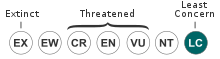
Feijoa sellowiana[2][3] also known as Acca sellowiana (O.Berg) Burret,[4] is a species of flowering plant in the myrtle family, Myrtaceae. It is native to the highlands of southern Brazil, eastern Paraguay, Uruguay, and northern Argentina.[5] Feijoa are also common in gardens of New Zealand.[6] It is widely cultivated as an ornamental tree and for its fruit. Common names include feijoa (/feɪˈʒoʊ.ə/,[7] /-ˈhoʊ.ə/,[8] or /ˈfiːdʒoʊ.ə/[9]), pineapple guava and guavasteen, although it is not a true guava.[10] It is an evergreen shrub or small tree, 1–7 metres (3.3–23.0 ft) in height.[11]
Etymology[edit]
Feijoa sellowiana Berg is from the genus which the German botanist, Ernst Berger, named after João da Silva Feijó, a Portuguese naturalist, and the specific name honors Friedrich Sellow, a German who first collected specimens of Feijoa in southern Brazil.[10] It has been nicknamed "pineapple guava", "Brazilian guava", "fig guava" or "guavasteen" in various countries.[10]
Fruit[edit]
The fruit matures in autumn and the skin is green. Its shape is roughly that of a prolate spheroid, and it is about the size of a chicken egg. It is sweet, slightly tart, with an aromatic bouquet reminiscent of tropical fruits such as passion fruit, cherry guava, or pineapple. The flesh is juicy and is divided into a clear, gelatinous seed pulp and a firmer, slightly granular, opaque flesh nearer the skin.[10] The fruit falls to the ground when ripe and at its fullest flavour, but it may be picked from the tree prior to falling to prevent bruising.
The fruit pulp resembles the closely related guava, having a gritty texture. The feijoa pulp is used in some natural cosmetic products as an exfoliant. Feijoa fruit has a distinctive, potent smell that resembles that of a fine perfume. The aroma is due to methyl benzoate and related compounds in the fruit.[12]
Growing conditions[edit]
The plant is a warm-temperate, subtropical plant that also will grow in the tropics, but requires at least 50 hours of winter chilling to fruit, and is frost-tolerant. When grown from seed, feijoas are noted for slow growth during their first year or two, and young plants, though cold tolerant, can be sensitive to high wind.
In the Northern Hemisphere, the species has been cultivated in the United Kingdom[13] and as far north as western Scotland, but under such conditions it does not fruit every year, as winter temperatures below approximately −9 °C (16 °F) kill the flower buds. Summer temperatures above 32 °C (90 °F) may also have an adverse effect upon fruit set. Feijoas are somewhat tolerant of drought and salt in soils, though fruit production can be adversely affected. Tolerant to partial shade, regular watering is essential while the fruit is maturing.
Cultivation[edit]

Some grafted cultivars of feijoa are self-fertile. Most are not and require a pollinator. Seedlings may or may not be of usable quality; and may or may not be self-fertile. Feijoas will mature into a sprawly shrub but can be kept successfully as a large container plant, though accommodations will need to be made for the width of the plants, and the need to encourage new growth for fruit production.
Feijoas are occasionally found as landscape plants in Texas, Florida, California, and the maritime Pacific Northwest. They can succeed in greenhouses in temperate parts of the United States; and have been grown in-ground as fruiting trees on the United States east coast in coastal Georgia and South Carolina as well as in California. Other regions of the United States such as the southernmost Appalachian Mountains, and the immediate coastal region from North Carolina to Delaware would warrant further investigation.

The fruit has been widely grown in New Zealand since the 1920s, and it has become a popular garden tree.[6] It is commonly available in season from March to June.[14][15] In New Zealand, the pollinators of this plant are bees, bumblebees, and medium-sized birds. The silvereye is a pollinator in the cooler parts of the South Island; the blackbird and the Indian myna, which feeds on the sweet, fleshy flower petals, are pollinators further north. In some areas where the species has been introduced, however, the trees have been unproductive due to lack of pollinators. The shrub has very few insect pests, although guava moth is a problem in Northland, New Zealand.[16]
In the South Caucasus, feijoa has been cultivated in the southern coastal region of Azerbaijan since 1928; cultivation in neighboring Georgia has gradually increased to about 988 hectares (2,440 acres) in 1986.[17]
Sale and shipping[edit]
Ripe fruit is prone to bruising; difficulty maintaining the fruit in good condition for any length of time, along with the short period of optimum ripeness and full flavor, probably explains why feijoas are not exported frequently, and are typically sold close to where they are grown. However, intercontinental shipping of feijoa by sea or air has been successful.[10]
Because of the relatively short shelf life, storekeepers need to be careful to replace older fruit regularly to ensure high quality. In some countries, they also may be purchased at roadside stalls, often at a lower price.
Feijoas may be cool-stored for approximately a month and still have a few days of shelf life at optimum eating maturity.[10] They also may be frozen for up to one year without a loss in quality.
Consumption[edit]
Nutrition[edit]
| Nutritional value per 100 g (3.5 oz) | |
|---|---|
| Energy | 230 kJ (55 kcal) |
12.92 g | |
| Sugars | 8.2 g |
| Dietary fiber | 6.4 g |
0.6 g | |
0.98 g | |
| Vitamins | Quantity %DV† |
| Thiamine (B1) | 1% 0.006 mg |
| Riboflavin (B2) | 1% 0.018 mg |
| Niacin (B3) | 2% 0.295 mg |
| Pantothenic acid (B5) | 5% 0.233 mg |
| Vitamin B6 | 4% 0.067 mg |
| Folate (B9) | 6% 23 μg |
| Vitamin C | 37% 32.9 mg |
| Vitamin E | 1% 0.16 mg |
| Vitamin K | 3% 3.5 μg |
| Minerals | Quantity %DV† |
| Calcium | 1% 17 mg |
| Iron | 1% 0.14 mg |
| Magnesium | 2% 9 mg |
| Manganese | 4% 0.084 mg |
| Phosphorus | 2% 19 mg |
| Potassium | 6% 172 mg |
| Sodium | 0% 3 mg |
| Zinc | 1% 0.06 mg |
| †Percentages estimated using US recommendations for adults,[18] except for potassium, which is estimated based on expert recommendation from the National Academies.[19] | |
100 grams (3.5 oz) of raw feijoa provides 55 calories and is 13% carbohydrates, 8% sugars, and 1% each of fat and protein. The raw fruit is a rich source of vitamin C, providing 40% of the Daily Value, but supplies no other micronutrients in significant amount.
Food uses[edit]
Although the skin is edible, the fruit usually is eaten by cutting it in half, then scooping out the pulp with a spoon. The fruit has a juicy, sweet seed pulp and slightly gritty flesh nearer the skin.[citation needed] The flower petals are edible.[10] The most common uses are eating raw, desserts such as sorbet, sweet pies, crumbles, or in salads. They are regularly consumed by birds.[20][21][22]
-
 The crisp, spicy-sweet tasting petals of feijoa flowers are edible.
 -
 Spread made of mashed raw feijoa
 -
 A display of feijoas for sale in Auckland, New Zealand


Varieties[edit]
Numerous cultivars of feijoa have been developed. These include:[citation needed]
- Anatoki
- Apollo
- Bambina
- Barton
- Den's Choice
- Choiceana
- Coolidge
- Edenvale Improved Coolidge
- Edenvale Late
- Edenvale Supreme
- Gemini
- Kaiteri
- Kakariki (a cultivar developed by Waimea Nurseries, New Zealand, large flavor-filled fruit, named for the Māori word for green)
- Mammoth – named for its relatively massive fruits
- Moore
- Nazemetz
- Opal Star
- Pineapple Gem
- Smilax – mid-sized, spherical fruits with smooth texture
- Trask
- Triumph
- Unique (NZ cultivar, particularly tolerant of clay soils, and self pollinating)
- Vista Long – noted for the long shape of its fruits, developed in Vista, CA
- Wiki Tu
References[edit]
- ^ IUCN SSC Global Tree Specialist Group, Botanic Gardens Conservation International (BGCI).; Canteiro, C. (2019). "Acca sellowiana". IUCN Red List of Threatened Species. 2019: e.T152946605A152946607. doi:10.2305/IUCN.UK.2019-3.RLTS.T152946605A152946607.en. Retrieved 22 March 2023.
- ^ a b Govaerts R. (2020). "Feijoa; in Plants of the World Online". Kew.
- ^ Lucas, Eve J.; Holst, Bruce; Sobral, Marcos; Mazine, Fiorella F.; Nic Lughadha, Eimear M.; Barnes Proença, Carolyn E.; Ribeiro da Costa, Itayguara; Vasconcelos, Thais N. C. (September 2019). "A New Subtribal Classification of Tribe Myrteae (Myrtaceae)". Systematic Botany. 44 (3). American Society of Plant Taxonomists: 560–569. doi:10.1600/036364419X15620113920608. ISSN 0363-6445. Retrieved 17 November 2022.
- ^ "Acca sellowiana". keys.landcareresearch.co.nz. Retrieved 2023-02-14.
- ^ "Acca sellowiana". Germplasm Resources Information Network. Agricultural Research Service, United States Department of Agriculture. Retrieved 25 May 2013.
- ^ a b Evans, Kate (Jul 2020). "The People's Fruit". New Zealand Geographic (164). Kowhai Media. Retrieved 2 April 2021.
- ^ Brazilian Portuguese preferred pronunciation — http://dictionary.reference.com/browse/feijoa feijoa. The American Heritage Dictionary of the English Language: Fourth Edition. 2000
- ^ Spanish preferred pronunciation — Sunset Western Garden Book, 1995:606–607
- ^ "'Citrusy aroma': how feijoas baffled a New Zealand immigrant – and polarise a nation". The Guardian. 2021-04-02. Retrieved 2021-04-04.
pronounced "fey-oa" in its native South America and "fee-jo-ah" in New Zealand
- ^ a b c d e f g Morton JF (1987). "Feijoa; In: Fruits of Warm Climates". Center for New Crops & Plant Products, Department of Horticulture and Landscape Architecture, Purdue University, West Lafayette, IN. pp. 367–70.
- ^ "Feijoa | plant species | Britannica". www.britannica.com. Retrieved 2023-02-15.
- ^ Shaw GJ, Ellingham PJ & Birch EJ. 1983. Volatile constituents of feijoa-headspace analysis of intact fruit. J.Sci.Fd.Agric. 34: 743-747.
- ^ ApteryxGav (2020-03-20). "Feijoas growing in UK - public parks, Zoos and Gardens". Feijoas UK. Retrieved 2023-02-15.
- ^ Christian, Harrison (15 May 2015). "385g monster sets new feijoa record". Hawkes Bay Today. Archived from the original on 4 April 2016. Retrieved 21 March 2016.
- ^ "New Zealand Feijoa Growers Association". New Zealand Feijoa Growers Association. Archived from the original on 3 March 2016. Retrieved 21 March 2016.
- ^ Wakelin RH; et al. (2009). "Guava moth (Coscinoptycha improbana) mating disruption using asian peach moth (Carposina sasakii) pheromone dispensers" (PDF). Plant and Food Research, New Zealand. Archived from the original (PDF) on 2015-01-14. Retrieved 28 April 2015.
- ^ Bose, T.K.; Mitra, S.K.; Sanyal, D., eds. (2001). Fruits: tropical and subtropical, Volume 2. Naya Udyog. p. 660. ISBN 978-81-85971-83-4.
- ^ United States Food and Drug Administration (2024). "Daily Value on the Nutrition and Supplement Facts Labels". Retrieved 2024-03-28.
- ^ National Academies of Sciences, Engineering, and Medicine; Health and Medicine Division; Food and Nutrition Board; Committee to Review the Dietary Reference Intakes for Sodium and Potassium (2019). Oria, Maria; Harrison, Meghan; Stallings, Virginia A. (eds.). Dietary Reference Intakes for Sodium and Potassium. The National Academies Collection: Reports funded by National Institutes of Health. Washington, DC: National Academies Press (US). ISBN 978-0-309-48834-1. PMID 30844154.
- ^ "Feijoa". California Rare Fruit Growers, Inc. 1996. Retrieved 1 February 2022.
- ^ "Pineapple guava; Feijoa (Feijoa sellowiana)". Bandon Oregon Garden Plant List. 2012.
- ^ "Feijoa acca sellowiana – Pineapple guava". gardenofaedyn.com. Archived from the original on 2012-03-24.
External links[edit]
